
Choosing the right technology partner can make or break a web project. For companies weighing frameworks, budgets, and timelines, mean stack consulting services offer a practical middle ground: proven JavaScript-based tools, a single language across the stack, and a development process built for speed.
This guide walks through what these services actually involve, why so many teams rely on stack developers who specialize in this framework, and how to pick a partner that fits your goals.
It also covers the practical trade-offs, pricing, timelines, and team structure that tend to get glossed over in more generic overviews of software development, but that shape whether a project actually succeeds.
What Are Mean Stack Consulting Services?
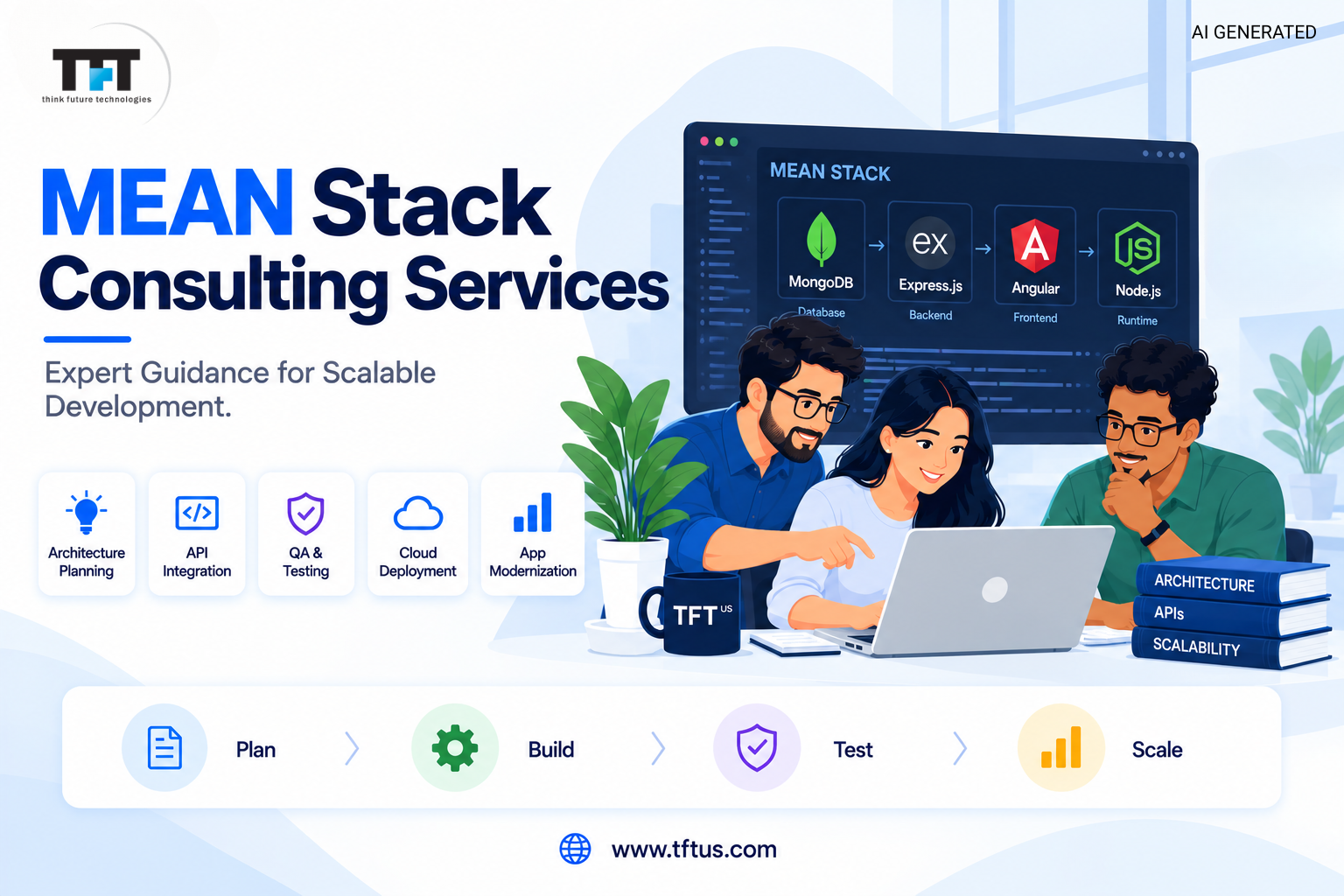
Mean stack consulting services help businesses plan, build, and maintain applications using MongoDB, Express.js, Angular, and Node.js, four key technologies that share a common language: JavaScript.
A consulting engagement typically starts with an assessment of your existing systems, followed by recommendations on architecture, tooling, and team structure. The goal isn’t just to write code; it’s to make sure the technical choices actually support the business outcome you’re after.
Stack Developers Who Understand Your Business
Good stack developers do more than implement features. They ask why a feature matters, how it fits your roadmap, and what happens when your user base doubles.
That context shapes everything from database schema design to how components are structured for reuse later.
Web Development Built for Growth
Web development under this model isn’t a one-time build. Consultants typically design with future growth in mind, so the application doesn’t need a rewrite the moment traffic increases.
This forward-looking approach is one reason mean stack development company engagements tend to outlast simpler, less structured builds.
Why Businesses Choose Mean Stack Development Services
Mean stack development services appeal to companies that want to move fast without sacrificing structure. Using one language across frontend and backend cuts down on context-switching and miscommunication between teams.
It also simplifies hiring; developers fluent in JavaScript can contribute across the entire codebase rather than being siloed into frontend-only or backend-only roles.
Development Services Tailored to Your Goals
Not every project needs the same development services. A startup validating an idea needs speed and a lean codebase; an enterprise migrating a legacy system needs careful planning and rigorous testing.
A capable consulting partner adjusts its approach based on where you are, not a fixed template.
Mobile App Development Alongside Web Apps
Because the MEAN stack is JavaScript-based end-to-end, teams can extend the same backend logic to power mobile app development without duplicating work.
This is especially useful for companies that want a web app and a companion mobile experience without maintaining two separate backend systems.
Core Mean Stack Components Explained
Understanding the mean stack components helps clarify why this combination has stayed popular for building modern web applications.
MongoDB, Flexible Data Storage
MongoDB stores data as JSON documents rather than rigid tables, which makes it well-suited to applications where data structures evolve over time.
This flexibility is particularly valuable during early development, when requirements are still being refined.
It also simplifies work for project managers coordinating between design and engineering, since schema changes don’t require the same upfront sign-off that relational databases often demand.
Express.js, Streamlined Backend Logic
Express.js is a lightweight web application framework that runs on Node.js. It handles routing, middleware, and server-side logic with minimal overhead.
Because it stays out of the way, developers can build custom backend logic without fighting the framework.
Angular: Dynamic Frontend Experiences
Angular is the frontend framework responsible for what users actually see and interact with. It supports building single-page applications, where content updates dynamically without full page reloads.
That translates into a smoother, app-like experience for end users.
Node.js: Fast, Scalable Runtime
Node.js allows JavaScript to run on the server, unifying the language across the entire stack. Its non-blocking architecture handles concurrent requests efficiently, which matters for applications expecting high traffic loads.
Together, these four technologies form a cohesive, JavaScript-based framework for building scalable web applications, allowing developers to move fluidly between layers of the codebase instead of context-switching between languages.
Building Stack Applications That Scale
Whether you’re launching a single stack app or a suite of connected tools, scalability should be part of the architecture conversation from day one.
From a Single Stack App to an Enterprise Platform
Many products start small, a single stack app solving one problem for a limited audience. As usage grows, the architecture needs to support new features, more users, and higher data volumes without a full rebuild.
Consultants plan for that trajectory early, even if the first version stays lean.
Handling High Traffic Loads
High traffic loads expose weaknesses in poorly planned systems quickly. Node.js’s event-driven model, paired with well-tuned performance at the database layer, helps applications stay responsive under load.
Load testing during development catches most of these issues before they reach production.
Technical Expertise That Sets Consultants Apart
Technical expertise is the actual product being sold in a consulting engagement, not just lines of code, but judgment about what will hold up over time.
The global developer talent pool is also substantial. According to Keyhole Software’s 2026 industry research, there are approximately 28.7 million software developers worldwide. For businesses using MEAN stack development services, this represents a broad talent pool from which consulting partners can build teams with the required full-stack and JavaScript expertise.
Full Stack Developers on Every Project
Full stack developers bring visibility across the entire application, which helps catch integration issues that specialists working in isolation might miss.
They can also move between frontend and backend work as project priorities shift, which keeps timelines flexible and reduces the bottlenecks that appear when a project depends on a narrow set of specialists.
Cross-Platform Development Know-How
Cross-platform development know-how matters when a business wants consistent behavior across web, mobile, and sometimes desktop environments.
Shared JavaScript logic reduces the risk of features behaving differently depending on where they’re accessed.
Architecture Design for Long-Term Success
Architecture design decisions made early in a project tend to be the hardest to reverse later, which is why this stage deserves real attention.
Planning Before You Build
Before writing a single line of code, experienced teams map out data flow, component structure, and how different parts of the application will communicate.
This planning phase saves significant rework down the line.
Scalable Solutions From Day One
Scalable solutions don’t happen by accident. They come from deliberate choices, modular code, clear separation between frontend and backend, and databases designed to handle growth in data volume and complexity.
Case Study: Rebuilding an Enterprise Platform After an Architecture Assessment
A technology services company was managing a complex hardware platform operating across multiple locations. Before moving forward, the client needed to understand whether its existing architecture could support its long-term requirements.
Softjourn conducted a comprehensive architecture assessment covering the existing codebase, infrastructure, and CI/CD pipeline. The assessment identified fundamental limitations in the existing technology stack. Instead of simply refactoring the legacy system, the team recommended a complete rebuild using AWS, PostgreSQL, and a microservices architecture.
The project established a new foundation designed to reduce technical risk and improve scalability. The client completed the foundation build in just over a year and credited the partnership with helping create the foundation for a potentially market-leading solution.
The example demonstrates why architecture consulting should happen before development decisions become difficult to reverse. A good consulting partner should be willing to recommend a significant architectural change when the existing foundation is unlikely to support the product’s long-term goals.
Source
The Application Development Lifecycle
A structured application development lifecycle keeps projects on track from the first sketch to ongoing maintenance.
Initial Concept to Launch
Every project starts with an initial concept, a problem to solve, and an audience to solve it for. From there, the team moves through design, development, testing, and deployment in stages, with checkpoints along the way.
Quality Assurance at Every Stage
Quality assurance isn’t a final step tacked onto the end of a project. Testing throughout the development lifecycle catches issues earlier, when they’re cheaper and faster to fix.
Project Management That Keeps Timelines on Track
Strong project management keeps development on schedule and budget by surfacing risks early and adjusting scope before small issues become large delays.
Regular check-ins between the development team and stakeholders keep expectations aligned throughout the build.
Case Study: Building a Digital Bank in Just Nine Months
A UK-based company wanted to launch a digital banking platform while meeting the regulatory requirements associated with financial services. The project needed to balance rapid development with compliance and reliability.
DashDevs built the full-stack digital banking platform from scratch, incorporating core banking functionality and a compliance-first architecture. The team drew on experience across more than 100 financial products to address the regulatory requirements while maintaining development velocity.
The digital bank was built and launched in nine months, giving the client a rapid path to market while meeting investor scrutiny and regulatory standards.
Consulting expertise can influence more than the technical architecture. Experience with similar products and regulatory environments can help teams make better decisions earlier in the development lifecycle, reducing the time spent solving problems that could have been anticipated during planning.
Source
Mobile App Development With MEAN Stack
Mobile app development benefits from the same JavaScript foundation that powers the web application, reducing duplicated effort across platforms.
Code Reusability Across Web and Mobile
Code reusability is one of the more practical advantages of this approach. Business logic written once on the backend can serve both a web and mobile client without being rebuilt for each.
Cross-Platform Apps Without the Trade-Offs
Cross-platform tools built on JavaScript let teams deliver mobile applications for multiple operating systems from a shared codebase, cutting down on development time without sacrificing much in performance.
API Development and Integration
API development connects your application to the outside world, payment processors, analytics tools, third-party services, and internal systems alike.
Connecting Stack Applications to the Tools You Already Use
Well-designed APIs let stack applications integrate smoothly with your existing software ecosystem rather than forcing a wholesale replacement of tools your team already relies on.
This matters most for larger enterprises with established workflows that can’t be disrupted overnight.
Single Page Applications and the MEAN Stack Advantage
Single page applications have become the default for many modern products, and the MEAN stack is particularly well suited to building them.
Why Single Page Web Apps Feel Faster
Single-page web apps load once and then update content dynamically, avoiding the full-page reloads that make older websites feel sluggish.
For target audiences accustomed to app-like responsiveness, this difference is noticeable immediately.
JSON Documents and JavaScript-Based Frameworks
Because MongoDB stores data as JSON documents and Angular consumes JSON natively, data moves through the stack with minimal conversion overhead, one more reason this JavaScript-based framework combination performs well in practice.
App Modernization With MEAN Stack
App modernization projects bring older, harder-to-maintain systems up to current standards without discarding everything that already works.
Upgrading Existing Applications Without Starting Over
Existing applications built on outdated technology often still contain valuable business logic. A modernization approach preserves that logic while rebuilding the surrounding architecture on more current, maintainable technology.
This is usually faster and less risky than a full rewrite.
Competitive Pricing Without Cutting Corners
Competitive pricing is often the deciding factor between consulting firms, but cost shouldn’t be evaluated in isolation from quality.
What Drives the Cost of a Mean Stack Development Company
A mean stack development company’s pricing typically reflects team seniority, project complexity, and the level of ongoing support included after launch.
According to the U.S. Bureau of Labor Statistics, web developers had a median annual wage of $92,650 in May 2025, while web and digital interface designers earned a median of $104,000. These workforce costs are an important factor for businesses comparing an external MEAN stack consulting engagement with building and maintaining an internal development team.
Cheaper isn’t always more cost-effective once maintenance and technical debt are factored in. A lower initial quote that leads to a rebuild eighteen months later rarely ends up being the cheaper option.
Getting Value From Your Development Team
The right development team delivers value through fewer bugs, better documentation, and code that’s easier to extend later, not just a lower hourly rate up front.
Choosing the Right Mean Stack Development Company
Selecting a mean stack development company is as much about fit as it is about technical skill.
Questions to Ask Before You Hire
Ask about past projects similar to yours, how the team handles scope changes, and what quality assurance looks like in practice. The answers reveal more than a portfolio alone.
Signs of a Dedicated Team
A dedicated team communicates proactively, flags risks early, and treats your project’s success as their own rather than just another ticket to close.
Industries That Benefit From MEAN Stack Consulting
MEAN stack consulting isn’t limited to any single sector; its flexibility makes it a fit across various industries.
Various Industries, One Flexible Framework
From e-commerce platforms to internal enterprise tools, the same core stack adapts to different business needs by swapping in industry-specific integrations and workflows rather than rebuilding the foundation each time.
Cloud Solutions and MEAN Stack Deployment
Cloud solutions pair naturally with MEAN stack applications, since all four components support containerized, cloud-native deployment. This makes it easier to scale infrastructure up or down based on actual demand, rather than over-provisioning for peak traffic that may never arrive.
Conclusion
Mean stack consulting services give businesses a way to build scalable, maintainable applications using a unified, JavaScript-based framework. From architecture design through app modernization and ongoing quality assurance, the right consulting partner shapes decisions that pay off well beyond launch day.
Whether you’re building your first stack app or modernizing an enterprise platform, the technologies and process outlined here offer a clear path toward that goal.
The businesses that get the most out of this approach tend to treat it as a long-term partnership rather than a one-off project, bringing consultants back in as the application evolves, rather than starting from scratch with a new team each time requirements change.
FAQ’s
How much does MEAN stack consulting cost?
The cost depends on project complexity, consultant experience, engagement model, and ongoing support requirements. Businesses should also consider architecture, testing, integrations, and maintenance when comparing costs. For context, the U.S. BLS reported a median annual wage of $92,650 for web developers in May 2025.
How do I choose a MEAN stack consulting company?
Look for experience with similar projects, strong technical expertise, transparent processes, and reliable communication.
Ask about previous work, team structure, architecture decisions, QA practices, and post-launch support.
The right partner should connect its technical recommendations to your specific business goals.
When should I hire MEAN stack consultants instead of full-time developers?
MEAN consultants are useful when you need specialized expertise, faster development, or support for modernization projects. They can also help when building a permanent technical team isn’t practical for your current project stage. Full-time developers may be better when you need continuous development and long-term product ownership.
What services are included in MEAN stack consulting?
MEAN stack consulting can include architecture planning, application development, API development, database design, and QA. It may also cover Angular, Node.js, Express.js, cloud deployment, application modernization, and maintenance. The exact services depend on your project’s requirements and chosen engagement model.
What does a MEAN stack consultant do?
A MEAN stack consultant helps businesses plan and develop applications using MongoDB, Express.js, Angular, and Node.js. They can assess existing systems, design architecture, select technologies, and guide full-stack development. They also help ensure the application can scale as business requirements and user demand grow.

Leave a Reply