
For businesses building modern web applications, a scalable, agile tech stack is essential. MEAN stack development services address exactly that.
With MEAN stack development services, you get a team of experts who are all in the same technology stack, including MongoDB, Express.js, Angular, and Node.js.
This guide lists the best options, describes what MEAN stack development services include, and outlines the development process, expenses, and pitfalls to avoid. It also includes a handy checklist to review before signing with any provider.
Quick Results: Best MEAN Stack Developers at a Glance
|
1 |
Think Future Technologies (TFTUS) |
Gurugram, India |
Development with built in quality assurance |
|
2 |
Konstant Infosolutions |
Jaipur, India |
Long term technical support and stability |
|
3 |
Daffodil Software |
Gurugram, India |
Legacy migration and technical consulting |
|
4 |
Brainvire |
Mumbai, India |
Enterprise applications and eCommerce |
|
5 |
ViitorCloud Technologies |
Ahmedabad, India |
Cloud native mean stack solutions |
|
6 |
eSparkBiz |
Ahmedabad, India |
Startups needing rapid development |
|
7 |
Aalpha Information Systems |
Bangalore, India |
Scalable web applications at volume |
|
8 |
Contus |
Chennai, India |
Enterprise digital transformation |
|
9 |
Brain Inventory |
Indore, India |
Customizable, expandable web apps |
|
10 |
Devout Tech Consultants |
Mohali, India |
Industry specific software development |
|
11 |
TechnoComet Solutions |
Delhi NCR, India |
ROI focused mean stack projects |
|
12 |
Toptal |
Global remote network |
Hiring individual vetted developers |
What Do MEAN Stack Developers Actually Do?
In MEAN stack development, developers create both the front-end and back-end of web apps using the same tech stack, all in JavaScript.
They can create interactive UIs with Angular, backend logic in Express, and database development with the flexible MongoDB data layer.
Beyond the initial build, many suppliers provide ongoing support, post-launch support, and updates as business requirements change and web development projects grow over time.
According to Research and Markets, the global full-stack development service market is valued at approximately $150.27 billion in 2026 and is projected to reach $592.25 billion by 2032, representing a 25.4% CAGR. This growth reflects the expanding demand for development approaches that can cover both frontend and backend requirements.
Want to see how the MEAN technologies work together in a complete application? This video provides a practical overview of full-stack development using MongoDB, Express.js, Angular, and Node.js, making it a useful introduction before comparing MEAN stack development providers.
How We Ranked These MEAN Stack Developers
We compiled this list not from well-known names, but from a consistent set of factors.
-
Technical Expertise Across the Full Stack
We evaluated each company’s technical depth across all four MEAN stack technologies, not just two or three layers.
-
Real Client Track Record
We searched for actual client reviews or case studies where projects were delivered, not just marketing.
-
Range of Services Offered
We considered whether service providers offer complete full-stack development services, from architecture to deployment, or only part of it.
-
Support After Launch
We also considered companies that offer ongoing and post-launch support, as without it, there is real risk after launch.
-
Industry and Project Diversity
We studied experience across a range of industries, since one provider might have experience in one type of project but not another.
The Top Mean Stack Development Companies
Now, let’s have a closer look at every one of these companies on our list, beginning with our top pick.
1. Think Future Technologies (TFTUS):
Headquarters: Gurugram, Haryana, India
Founded: 2006
Offices: United States, Israel, Mexico, Dubai, and Europe
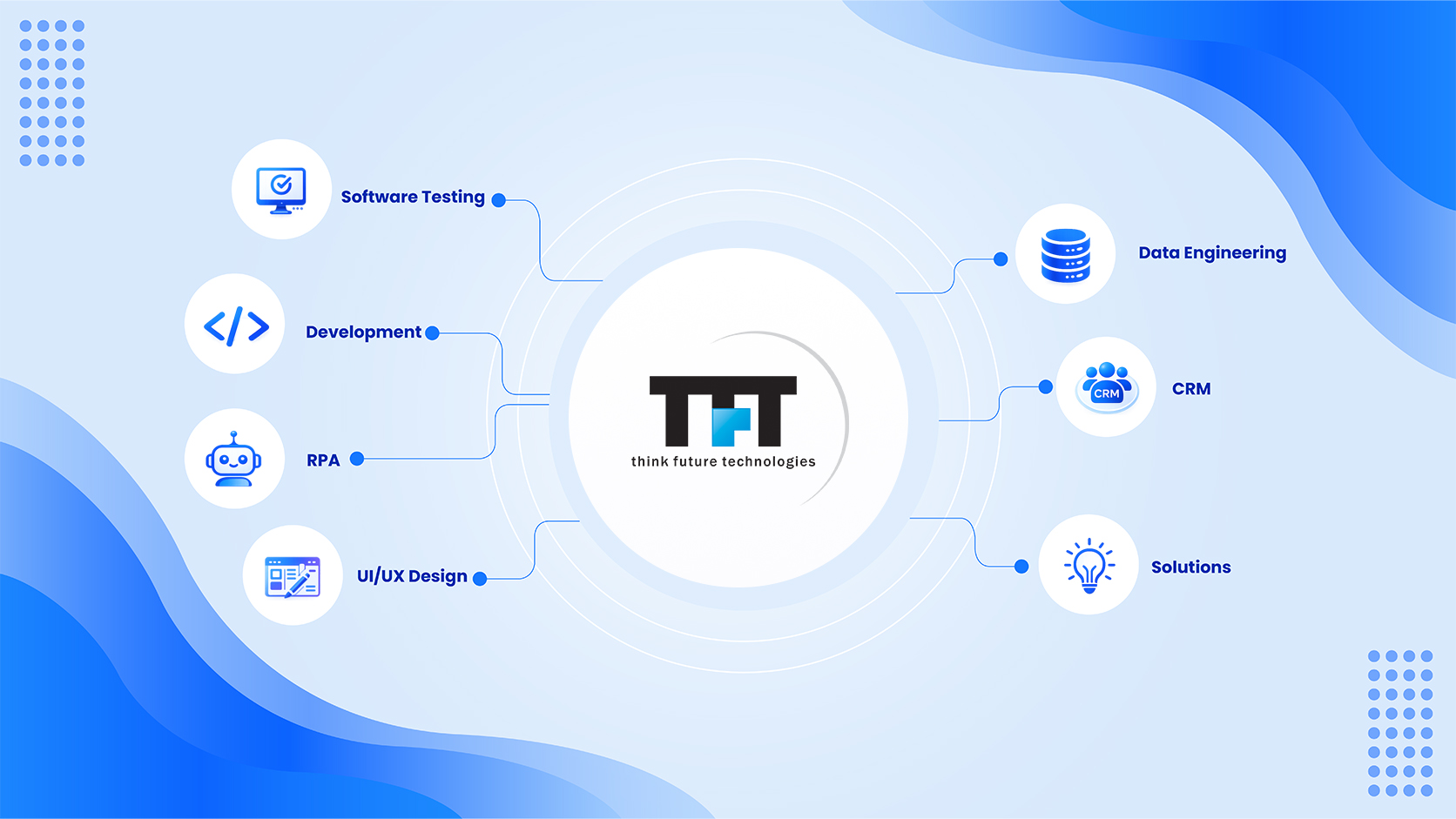
Think Future Technologies has the number one spot on this list. Established in 2006, TFTUS is a company that combines MEAN stack development with solid software testing foundations, as a result of which quality assurance occurs at every one of the project’s stages, and not only at the end.
We highlight TFTUS as our top choice because of this combined development and testing experience, not a simple external score. If QA at each step matters to your project, it’s worth discussing directly.
2. Konstant Infosolutions
Headquarters: Jaipur, Rajasthan, India
Founded: 2003
Offices: Pleasanton and New York in the US, London in the UK, and Dubai
Konstant Infosolutions has more than 20 years of experience in web and mobile app development. Their extensive experience makes them a reliable choice for longer-term projects and agreements. One of the strengths we most often cite is the consistent communication we provide throughout the development process.
3. Daffodil Software
Headquarters: Gurugram, Haryana, India
Founded: 1999
Offices: United States and additional international locations
Daffodil Software is more of a technical consulting shop than just another dev shop, providing clients with architecture guidance before they write code. They have experience with legacy system migration and can be a good fit for firms shifting an ongoing application to a new, modern technology stack.
4. Brainvire
Headquarters: Mumbai, India
Founded: Operating for over two decades
Offices: United States, UAE, and other global locations
Brainvire has worked for renowned global companies in the healthcare, retail, and finance sectors—whether as a MEAN stack, MERN stack, or full-stack developer. Their broader stack solutions, which aren’t limited to MEAN, suit companies with long-term technology needs that are unlikely to be confined to a single framework in the future.
5. ViitorCloud Technologies
Headquarters: Ahmedabad, Gujarat, India
Founded: Not publicly disclosed
Offices: United States, Mauritius, and Switzerland
As part of its MEAN stack development services, ViitorCloud specializes in cloud-native development, with the goal of future-proofing client businesses. Offices in three regions indicate a company with the capacity to accommodate the needs of cross-time-zone clients.
6. eSparkBiz
Headquarters: Ahmedabad, Gujarat, India
Founded: Over 15 years of operating history
Offices: India, with international client servicing
eSparkBiz’s own published figures indicate a solid process maturity, with more than 1,000 projects completed in web, mobile, and cloud solutions.
They work with startups, SMBs, and enterprises, depending on the project’s complexity and the company’s size.
7. Aalpha Information Systems
Headquarters: Bangalore, Karnataka, India
Founded: Not publicly disclosed
Offices: India-based, serving international clients
Aalpha specializes in building reliable, scalable Web applications using MongoDB, Express.js, Angular, and Node.js as the technology backbone. They are based in Bangalore, so they can leverage a larger developer community to scale their stack development team quickly on larger projects.
8. Contus
Headquarters: Chennai, India
Founded: 2008
Offices: United States and other regional locations
Contus sees itself as a digital transformation provider, offering enterprise customers a combination of MEAN stack, mobile, and cloud solutions. According to the company, businesses looking for a larger dedicated team for complex projects are best suited to Contus, which has more than 300 engineers and has delivered over 100 products.
9. Brain Inventory
Headquarters: Indore, Madhya Pradesh, India
Founded: Not publicly disclosed
Offices: India-based, serving global clients
Brain Inventory builds web apps using the MEAN stack, taking projects from concept through full launch. They have a future-expansion bias, which is good for businesses looking to add features beyond the first release.
10. Devout Tech Consultants
Headquarters: Mohali, Punjab, India
Founded: 2017
Offices: India-based, with global client delivery
Since its inception in 2017, Devout Tech Consultants has completed projects across various industry verticals, including real estate, travel, and health care, developing industry-specific knowledge. The positive is that it was established relatively recently, with a quickly expanding project portfolio that meets a wide variety of business needs.
11. TechnoComet Solutions
Headquarters: Delhi NCR, India
Founded: Not publicly disclosed
Offices: India-based
TechnoComet’s MEAN stack applications are built with a clear focus on ROI and quick project delivery, including real-time features using MongoDB Change Streams.
The ROI-first approach suits companies that consider cost-effectiveness an integral part of their development strategy.
12. Toptal
Headquarters: Global, fully remote workforce
Founded: 2010
Offices: No fixed physical offices, operates through a vetted talent network
Toptal is a whole different ball game! Instead of hiring a full agency, you get individual, vetted MEAN stack developers from a worldwide network of over 20,000 professionals.
This is for companies that want to add one or two experienced developers to their existing dedicated team, instead of outsourcing the entire project.
Why Choose Mean Stack Development Services
MEAN Stack Development Services offer several options, and many companies rely on them for several reasons.
Rapid Development Through One Shared Language
Because all layers are implemented in JavaScript, teams move faster, and fewer handoffs occur between front-end and back-end specialists. According to Coderio’s 2026 business analysis, unified full-stack engineering can reduce development complexity and speed up time-to-market by minimizing friction between different layers of an application.
This is particularly relevant to MEAN development, where MongoDB, Express.js, Angular, and Node.js work within the same JavaScript-based ecosystem.
Cost-Effective Scaling
Because fewer language specialists are needed to do the same job, MEAN stack app development is likely to be less expensive than managing multiple language experts.
Strong Fit for Modern Web Applications
Single-page applications, real-time dashboards, and content management systems built on flexible data are common for dynamic full-stack applications.
Deep Expertise Available at Scale
A large community of active MEAN developers makes this technology stack much easier to find than other combinations.
Case Study: Paciolan Cuts Platform Modernization Time by 30%+
Paciolan, a leading ticketing technology provider, was working to modernize its platform while maintaining development speed and quality.
The company partnered with FullStack to introduce agentic, AI-native workflows directly into its platform modernization process. The approach integrated AI capabilities into development activities to automate repetitive work and accelerate the delivery of modernized platform features.
The AI-native development workflow reduced the platform modernization timeline by more than 30%, helping the company move through development and delivery more quickly.
What MEAN Stack Development Services Typically Include
A full-service engagement is more than just writing code from a spec sheet.
Architecture and Stack Planning
Before development, providers map the data flow through the stack architecture, reducing the likelihood of costly rework later in the development process.
Front End and API Development
Front-end development uses Angular, and back-end API development uses Express, separating the GUI from the data elements.
Testing and Quality Assurance
Testing ensures functionality and performance before release and identifies problems when they are still inexpensive to fix, rather than after release.
Deployment and Ongoing Support
Once launched, continuous support includes bug fixes, monitoring, and small enhancements as the web application develops and changes.
Providers who have in-house QA – like TFTUS – typically integrate testing into all phases rather than reserve it for the “check box” at the end before it goes live.
MEAN Stack vs Full Stack vs MERN Stack
Full-stack development involves programming in any combination of languages, whereas MEAN stack developers focus on a single JavaScript-based stack throughout the project.
The MERN stack replaces Angular with React while keeping the same backend technologies, providing a similar development workflow for the existing team but with a different frontend framework.
The decision typically comes down to your team’s current expertise and whether your project needs Angular’s structure or React’s flexibility for building interactive user interfaces.
Sometimes the logic of internal consistency is enough – companies may have other products in their business that are already running on React and are tempted to pick MERN for this reason.
Development Costs: What to Expect
Rates vary based primarily on provider location and team experience level — here’s what to budget for.
Typical Hourly Rates
-
India-based providers: $20–$50/hr
-
US-based providers and vetted networks (e.g., Toptal): $60–$150/hr
For additional context, the U.S. Bureau of Labor Statistics reports that the median annual wage for web developers was $92,650 in May 2025. This provides a useful benchmark when comparing the cost of external MEAN stack development services with building an internal development team.
What Drives the Final Price
-
Project complexity and required feature depth
-
Timeline (rush delivery adds a premium)
-
Whether ongoing/post-launch support is bundled into the contract
-
Team composition (full agency vs. individual freelance hire)
Cost Reality Check
The quoted hourly rate is only part of the picture. A lower rate with no QA, documentation, or post-launch support often costs more overall once rework and maintenance gaps are factored in — so compare total engagement cost, not just the hourly number, across at least three providers before deciding.
Common Use Cases for MEAN Stack Development
This technology stack is particularly well suited for certain types of projects.
Single Page Applications
In the MEAN stack, Angular handles single-page applications (SPAs) well, where content updates dynamically without a full page reload.
High Performance Web Applications
Node.js can handle many concurrent connections efficiently, making it ideal for high-performance applications such as live dashboards and booking systems.
Content Management Systems
Its flexible data layer makes it a good fit for content management systems that must manage a diverse array of content across social media and marketing sites.
Enterprise and Global Applications
MEAN stack development is used to create systems in global enterprises that need to scale efficiently and connect with internal tools.
Case Study: Benjamin West Speeds Up Procurement Decisions by 50%
Benjamin West needed to improve its purchase-order management processes, which relied on fragmented workflows and made it harder to maintain visibility across procurement activities.
The company partnered with FullStack Labs to develop RPM 2.0, a web-based purchase-order management application. The platform centralized procurement workflows, provided real-time visibility into purchase orders, and introduced automated processes for approvals and decision-making.
The resulting platform enabled 50% faster decision-making by streamlining procurement processes and reducing bottlenecks.
Choosing the Right MEAN Stack Development Company
Not all providers are suitable for every project. Here are some things that can help you distinguish between good and bad partners.
Verified Technical Knowledge
Request a short technical demonstration or real examples to validate technical expertise not exhibited in a sales pitch/Portfolio page.
Communication and Project Delivery Track Record
Ask for details on how the team delivers projects and communicates; this can indicate how the entire engagement will flow.
Post Launch Commitment
Before signing any contracts, make sure they provide post-launch support, because some contracts don’t.
Common Mistakes When Hiring MEAN Stack Developers
There are some common mistakes made by a handful of people in this space.
Choosing Based on Price Alone
The lowest price usually comes with no testing or documentation, and it often costs more down the road in bug fixes and rework.
Skipping Reference Checks
When you use only a company’s own case studies, you’ll see only the good, not what will happen to a typical client.
Underestimating Project Complexity
It takes time to match a small team to a large and complicated project. Before signing, verify that the vendor has handled projects of similar magnitude.
Ignoring Documentation Handover
Some vendors provide code that works but lacks documentation. This can make it harder for your in-house staff to maintain the application later.
Why This Matters
The cost of a bad hire goes beyond finances. It can postpone your launch date and affect client fulfillment if your new app is buggy or goes down after release.
By thoroughly researching a MEAN stack development company, you safeguard not only your budget but also your product’s long-term success in the digital space.
Those who skip due diligence quickly find themselves back on the market, losing the time they spent on onboarding and incurring extra expenses on top of what they originally quoted.
Comparison Table: Engagement Models
|
Full agency team |
Complex, ongoing projects |
Monthly team rate |
|
Dedicated developer |
Single, focused product |
Hourly or monthly rate |
|
Fixed price project |
Well defined, stable scope |
Flat project fee |
|
Vetted freelance network |
Adding individual skills |
Hourly per developer |
Practical Checklist Before You Hire
Verify technical skills in all four of the MEAN stack technologies.
Request true references from clients, not case studies.
Discuss what post-launch support and ongoing support entail.
Balance team size and experience with the true complexity of your project.
Check the prices at least three different providers. Shop at least three different providers.
Ask the team how they document architectural decisions for future reference.
Conclusion
It’s not simply about the lowest quote; it’s about the right MEAN stack development partner with proven experience, good communication, and support that doesn’t end on launch day. Don’t sign until you’ve matched the provider’s actual experience with your project.
Frequently Asked Questions
What are MEAN stack development services?
They can build Web applications with the NoSQL database MongoDB, the web application server Express, and the front-end framework Angular, and serve them over their own server, Node.js, from conception through deployment.
How is MEAN different from MERN stack?
The same process, but a different front-end framework: MERN replaces Angular with React, while maintaining the same MongoDB, Express, and Node.js.
How much do MEAN stack development services cost?
The price depends on the provider and the sizethe project size and is usually less expensive than hiring separate specialists for each layer.
Can MEAN stack handle enterprise-level applications?
Yes, the MEAN stack can support global enterprises and high-traffic applications with the right architecture and database design.
What should I look for in a MEAN stack development company?
Before signing a contract, check for verified technical expertise, real client references, and terms for post-launch support.
Should I hire an agency or an individual developer through a network like Toptal?
Individual hires are better for small jobs or when there’s a particular skill shortage on a team, while agencies are better for larger, more complex projects that require a full team.

Leave a Reply