

React developers are in high demand across many different sectors. Companies need individuals who are experts at building fast and scalable web applications. This guide explains the skills you will need for ReactJS development in easy-to-understand terms.
To become a successful ReactJS developer, you must acquire technical and soft skills as well. You will need a good understanding of the tools and concepts. In this article, we will outline the key skills needed for ReactJS development.
According to a 2026 industry analysis, React remains one of the most in-demand skills in the developer job market, making React JS developers highly valuable across companies.
Case Study:
A strong example of React’s industry relevance is its widespread adoption across enterprise companies. React powers applications for companies like Netflix, Airbnb, and Walmart, with over 80% of Fortune 500 companies leveraging ReactJS for their digital platforms. This level of adoption highlights the importance of hiring skilled React JS developers in building scalable, high-performance applications.
Understanding React Development
ReactJS is a JavaScript library created by Facebook for building user interfaces in web applications. It enables developers to create reusable components that render quickly whenever the data changes. With its component-based architecture, ReactJS has revolutionized how modern front-end development takes place.
ReactJS employs a virtual DOM (Document Object Model) to improve the speed of user experience and limit the need for developers to directly modify the browser. By breaking an interactive UI into several small functional units, developers can build it from these units. This design enables easy code maintenance, testing, and scalability.
According to Franklin University career research, data analysis skills are required in 15% of React.js developer roles, making it one of the top complementary skills for developers.

4 Core JavaScript Skills for ReactJS Developers
1. JavaScript Fundamentals
As the basis for all React development, developers must understand key JavaScript concepts when creating applications with the library. Understanding variables, data types, operators, and control structures will allow developers to store and manage data in their applications. By creating dynamic logic with functions, loops, and conditional statements, developers will build clean, efficient code and be more productive with React.
2. JavaScript ES6 and Beyond
Modern React development relies on ES6 features, including arrow functions, which enable developers to write component logic with more efficient syntax. Developers can use template literals to handle strings more effectively, while destructuring simplifies extracting values from objects and arrays.
3. Event Handling
Event handling is a way for developers to respond to user actions (such as clicks and form submissions) in React applications. When using React, a synthetic event system is provided that wraps the native event object and ensures consistent behavior across all browsers.
Using event handlers correctly, managing event propagation, preventing default actions, and understanding how functional components differ from class components are essential skills that all developers must possess to develop responsive applications and avoid common pitfalls.
4. DOM Manipulation
The Document Object Model (DOM) is a representation of a web page’s structure, created by the browser. Understanding how the DOM works is important for developers to understand how React can efficiently and performantly apply updates.
React uses a virtual DOM to prevent unnecessary updates. This improves performance and helps manage most interactions between components.
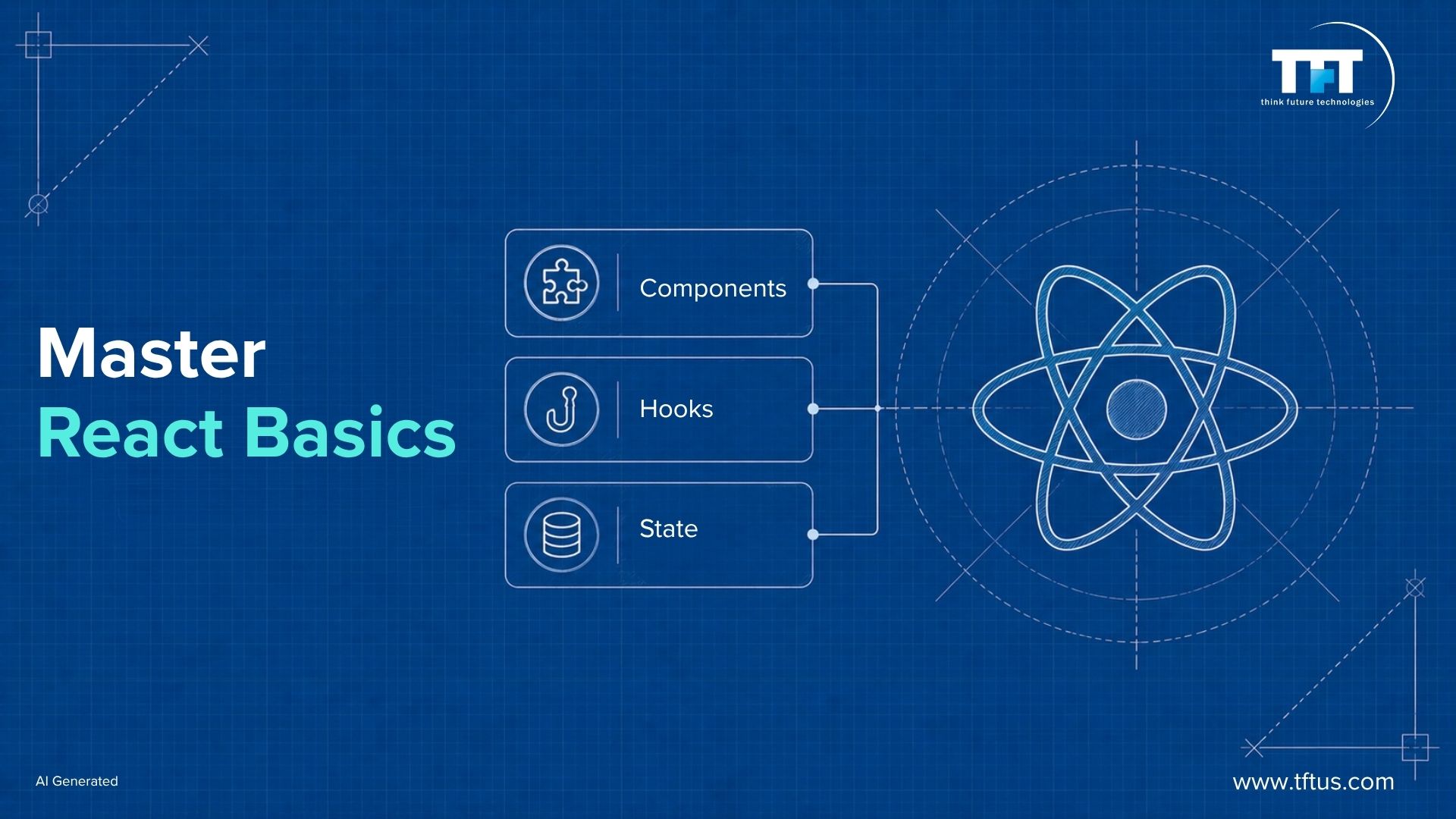
5 React Specific Knowledge
1. React Fundamentals
React Fundamentals covers components, props passed from parent to child components, and how the states of those child components are updated using props.
A developer should also be familiar with how a component’s lifecycle methods (in class-based components) or the use of effects (in functional components) will help a developer know when to mount, update, and “unmount” a component.
2. JSX and Syntax Extension
JSX is a syntax extension to React that enables developers to write “HTML” like code inside JavaScript. This makes building user interfaces simpler and more expressive for developers. It compiles to standard JS function calls that produce React elements. In addition, it allows JS expressions to be included directly in the JSX markup.
3. Component-Based Architecture
Applications built with React are composed of many small, reusable components that can be shared to create complete user interfaces.
Developers must understand how to structure their components so they maintain the right balance between reusability and simplicity, and when to split components apart.
4. Understanding Virtual DOM Understanding
The virtual DOM is a lightweight copy of the actual DOM that React uses to optimize the performance of how state changes occur. On every change in state, React takes a “snapshot” of the virtual DOM tree.
Once the snapshot is stored, React compares the current version of the virtual DOM tree against the previous version and finds exactly what has changed. This allows developers to avoid unnecessary re-renders when the actual DOM is being updated, helping to develop responsive, fast applications.
5. React Hooks
With the release of React 17, hooks provide an easy way for developers to create components that use the tools provided by React, such as useState and useEffect, when designing their functional components.
Custom hooks allow the extraction and sharing of logic across multiple components, which has led many developers to switch from class-based to functional components. It is imperative for developers to carefully follow the rules and best practices for hooks, as failure to do so can lead to serious bugs and performance issues in React applications.
TypeScript Knowledge
Type Safety Benefits
The main benefit of TypeScript is that it adds static typing to JavaScript, enabling developers to catch potential errors earlier in development (before the code executes). Additionally, using TypeScript will provide enhanced tooling, including better autocomplete and inline documentation.
React with TypeScript
Using TypeScript with React requires developers to clearly define the types of all components, props, and state via interfaces. In addition, developers will need a higher-level understanding of how to accurately define types for generic components, hooks, context, refs, and events.
By using type checking, IDEs are able to provide a better level of support and allow users to identify potential bugs at runtime, which has resulted in many organizations choosing to use React with TypeScript instead of using React without TypeScript.

3 Advanced React Concepts
Performance Optimization
Optimizing performance in React is important for allowing your React app to scale, using techniques like memoization as a means of avoiding unnecessary renders. Developers can utilize tools such as React. Memo, useMemo, and useCallback to help avoid re-rendering when props have value changes and help optimize expensive calculations or function references.
Understanding when and how to implement performance optimizations is essential for building scalable, high-quality React applications.
Case Study
A real-world example of performance optimization can be seen in a sports platform built for Australian cricket clubs. By improving their ReactJS and NextJS codebase, the developers achieved faster application performance and smoother user experience within just a few months. This shows how strong React development skills directly impact application speed and usability.
Error Boundaries
Error boundaries are a type of React component that prevent an entire React application from crashing by catching any JavaScript errors that arise within the child component tree. It will catch errors that occur during rendering, in lifecycle methods, or in constructor methods, and provide a fallback UI instead of broken component elements.
Server-Side Rendering
Server-side rendering allows HTML to be generated on the server before it is sent to a user’s web browser, increasing both the speed of initial page load and search engines’ ability to crawl and index pages.
Using frameworks like Next.js has made creating an application with SSR much easier, as developers have less to worry about when implementing new technologies (e.g., hydration, data fetching, and avoiding browser-specific server code).
3 Major Testing Skills for ReactJS Developers
1. Unit Tests
Unit tests are an effective way to verify that individual parts of your code (functions and components) do what you expect, allowing React developers to find bugs earlier and maintain high-quality code. The most widely used testing framework for React is Jest, which contains built-in test runners, assertion libraries, and mock support.
2. Integration Tests
Integration tests verify that components work together as intended and that different parts of an application can work together properly. Integration tests often verify an entire user workflow or ensure that an application can connect to APIs or other services properly.
3. End-to-End Testing
End-to-end testing simulates real user interactions across your entire application. This type of testing can be automated with tools like Cypress and Playwright, which simulate user actions in the browser to verify feature functionality.
End-to-end tests verify that the entire application works correctly from the front end to the back end, and they require a strong understanding of an application’s architecture to be used effectively.
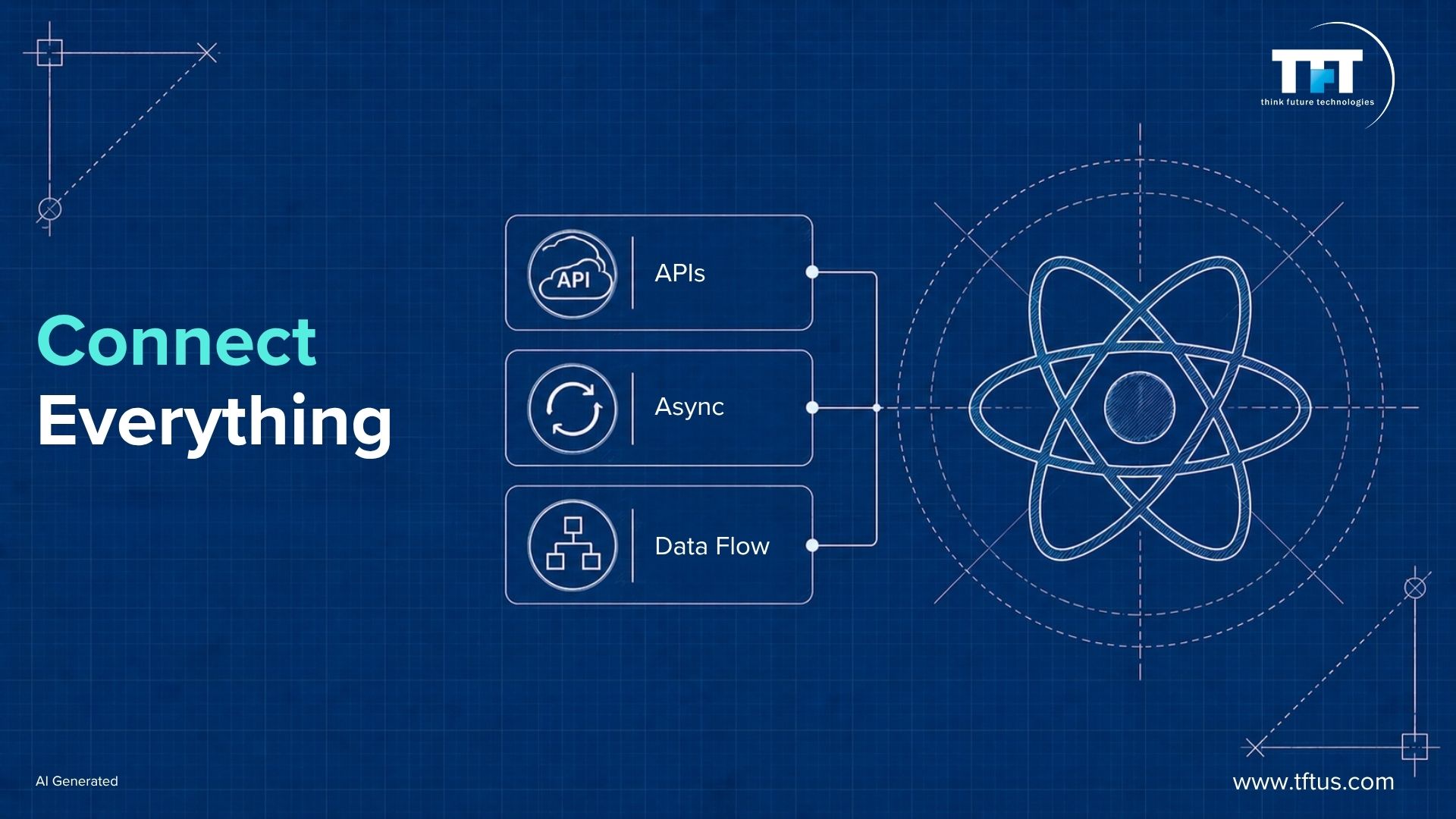
6 Major API Integration Skills For React Developers
1. RESTful APIs
RESTful APIs serve as the primary method by which React applications interact with their backend services. These HTTP methods, such as GET, POST, etc., retrieve and send data. Developers must take great care when handling API response codes, errors, loading states, and user feedback to create a positive user experience.
2. GraphQL
GraphQL is a way of requesting specific data as opposed to all of it. Developers use GraphQL as an alternative to using REST APIs because they can request only the information they need from the server. Developers utilize Apollo Client to integrate the usage of GraphQL and React together.
3. Async Operations
A key focus for many React developers today revolves around how to handle asynchronous-based operations such as API calls, timers, and user-initiated actions through the use of asynchronous-based code.
With everything being asynchronous, developers generally utilize several different coding approaches like promises, async/await, and the useEffect hook to properly handle different states (loading, success, and error).
4. HTML Fundamentals
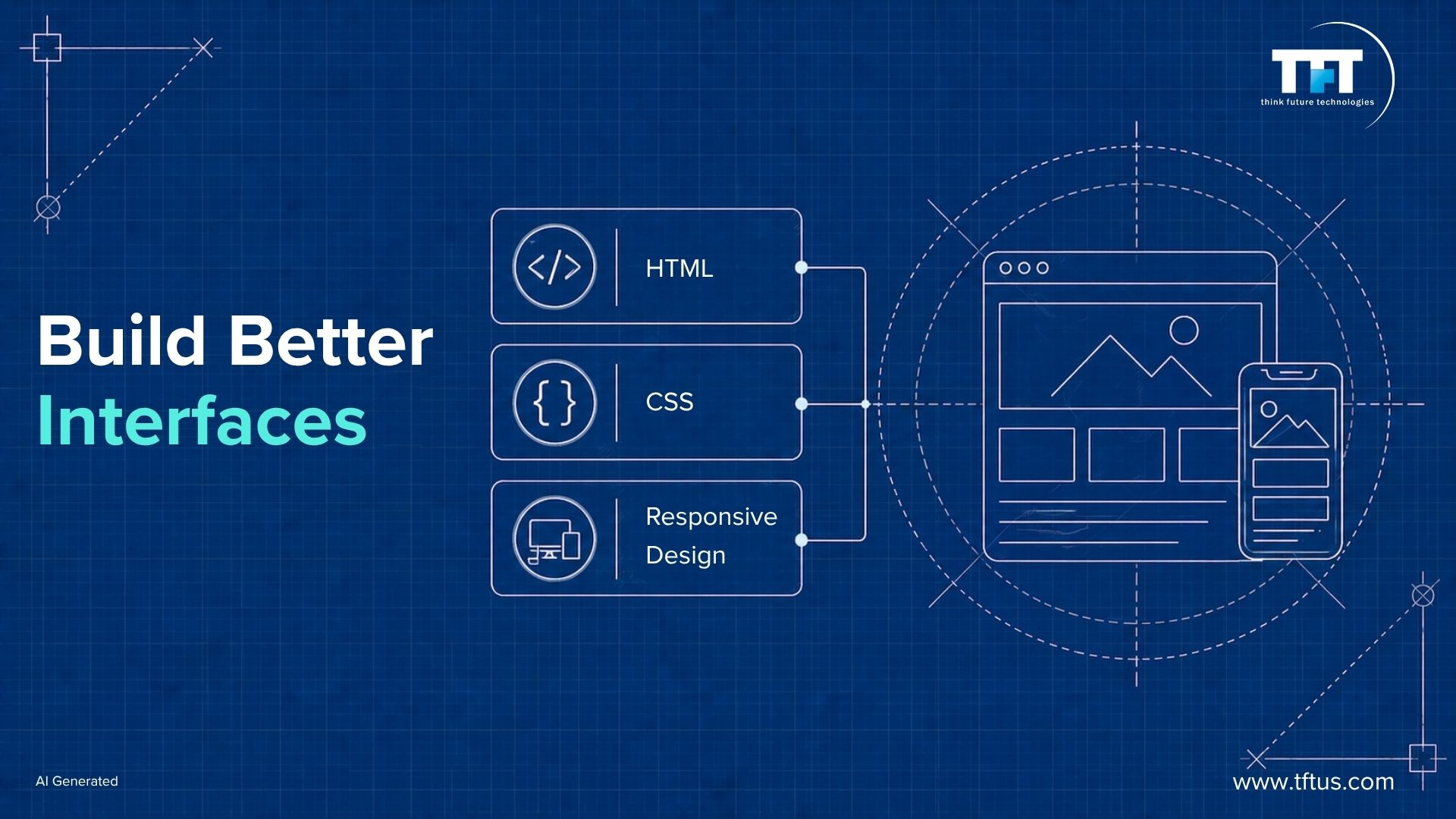
HTML (HyperText Markup Language) provides the foundation of how a web page appears to the user; therefore, knowing the basic structure of HTML elements and their semantic meaning when developing a React application is important for building a user-friendly application and improving SEO.
Developers must have a working knowledge of the basic HTML5 elements, form tags and their attributes, table markup, multimedia tags, etc., so they can use them correctly to create a functioning and usable user interface. Even though developers can use a component library, having a good understanding of how HTML works will help them create better UIs.
5. CSS and Styling
CSS (Cascading Style Sheets) is required to give a web application a style or look; as a result, React developers must have a thorough understanding of how to create consistent and stylish user interfaces through the use of styling techniques.
Developers who have a thorough understanding of the box model, flexbox, grid layout, and media query techniques help implement responsive design on all devices.
6. Responsive Design
Responsive design enables applications to function properly across all desktop, tablet, and mobile screen sizes. Developers create adaptable layouts through their use of mobile-first design methods, relative unit measurements, flexible grid systems, and media queries. Modern web development achieves a better user experience through device testing and design element balance between usability and visual appeal.
5 Must-Have Soft Skills for React Developers
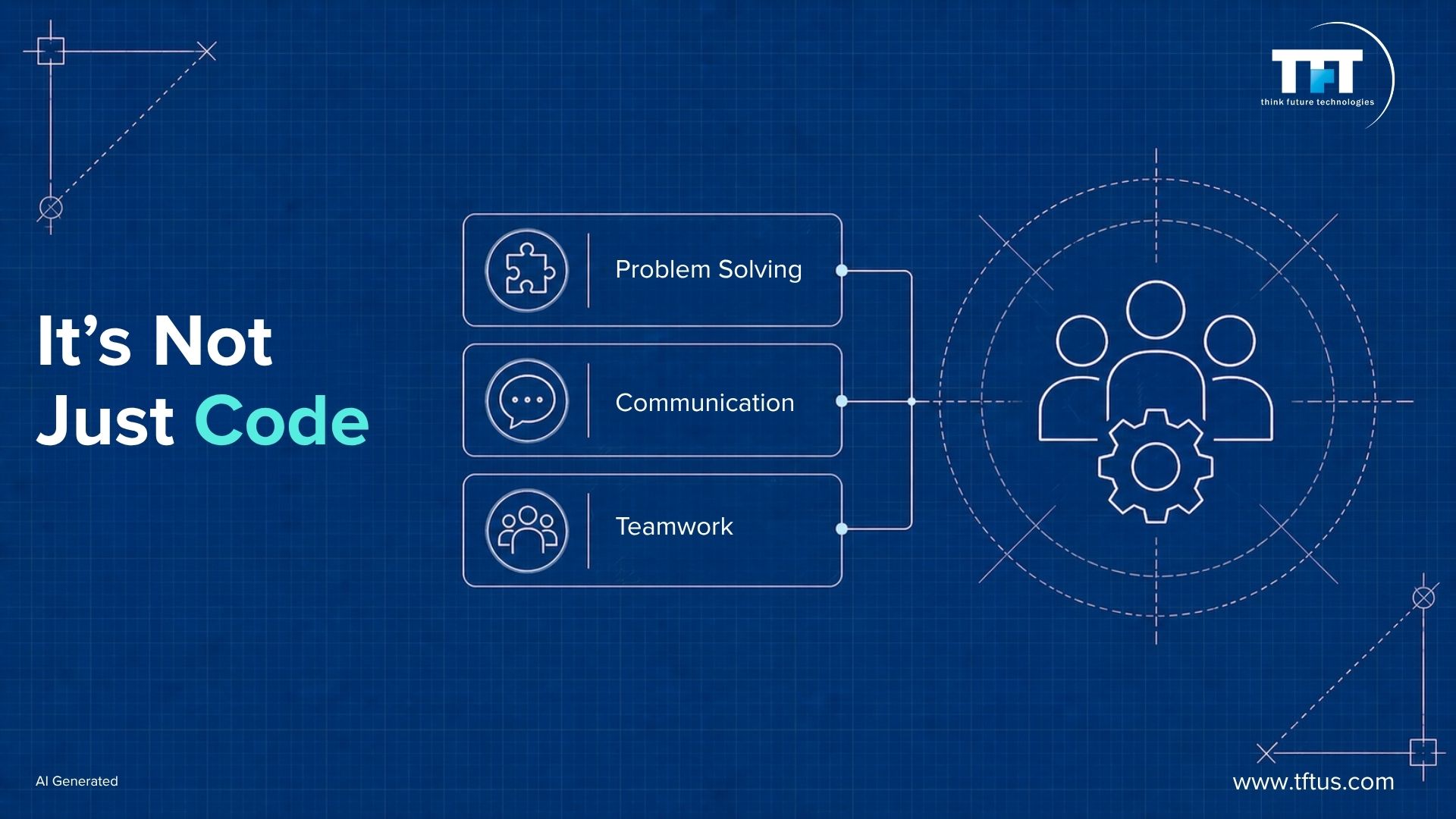
1. Ability to Solve Problems
Problem-solving skills are especially important for all React developers because they face different technical challenges regularly. Breaking down complicated problems into smaller components, having efficient methods for debugging, and testing different approaches/solutions will allow developers to solve problems more quickly.
2. Communication Skills
Good communication is critical for React developers to collaborate with team members and convey their technical knowledge to non-technical stakeholders. When participating in code reviews, a developer needs clear reasoning and constructive feedback as well as an open mind towards receiving their peers’ feedback.
3. Teamwork and Collaboration
Since many React developers work with other professionals (such as fellow developers and designers), developing collaboration capabilities is essential. Pair programming and peer code review create a strong learning environment and help developers improve the quality of their code across the entire team.
4. Time Management
Time management helps developers juggle multiple responsibilities, accurately estimate and report on the level of effort required to complete a task, and meet deadlines without sacrificing quality. By breaking larger features into smaller constituent tasks, a developer can more effectively track progress and prioritize tasks based on the value of the task to the company.
5. Continuous Learning
Web development evolves quickly, so React developers should always be learning about new tools, updates, and best practices. Reading documentation, keeping track of new products or features, or participating in workshops or conferences will help with this growth. Once you have learned the fundamentals of React, it becomes easier to adapt to other changes and stay relevant in your position.
3 Career Development Skills
1. Building a Portfolio
A strong portfolio can demonstrate your hands-on skills through professional experience rather than listing out the skills on a resume. Contribution to open source projects and developing personal projects can demonstrate collaboration, initiative, and technical skills.
2. Understanding the Market
The demand for React developers is strong. However, the skills required for the position vary by company and industry. For example, a startup may prefer a full-stack developer versus an agency that may require a user interface designer. By understanding job requirements, salary trends, and the career growth that you desire, you will be better prepared to negotiate a salary.
According to a 2026 industry analysis, modern React development now requires TypeScript, performance optimization, and scalable architecture as core skills rather than optional expertise.
3. Preparing for Interviews
React interviews will usually involve testing of technical skills, problem-solving skills, and communication skills. Practicing frequently asked interview questions and explaining your thought process clearly will improve your chances of success in interviews.
Learning ReactJS development will take you time, effort, and a solid understanding of JavaScript, the concepts of React, and the fundamentals of web development, as well as how to communicate and solve problems effectively.
Developers who develop their technical and practical skills will have the greatest success in their careers and will continue to be highly sought-after by employers as demand continues to increase.

Leave a Reply