
Choosing a software development partner is one of the highest-stakes decisions a business makes. The wrong choice costs more than a blown budget — it costs time-to-market, security posture, and the ability to scale once the product finds traction. This guide identifies the top software development company options on the market today, explains exactly how to evaluate them, and walks through pricing, red flags, technology stacks, and the questions that separate a real engineering partner from a vendor that just writes code.
Why “Top Software Development Company” Is the Wrong Search, Until You Define “Top” for Your Project
Every vendor on the internet claims to be a top software development company. The label means almost nothing on its own because “top” depends entirely on what you’re building, who you’re building it for, and what risk you’re trying to avoid.
A regulated healthcare startup and a consumer gaming studio have almost nothing in common in what they need from a development partner, even though both might search for the exact same phrase. Before comparing companies, it helps to get specific about which of the following describes your situation.
You Need a Full Product Built From Zero
No existing engineering team, no legacy code, and a blank architecture decision in front of you. This is the highest-risk, highest-opportunity scenario, and it rewards a vendor with strong discovery and architecture practices over one that simply codes fast.
You Have an Internal Team, but a Capability Gap
Many companies don’t need a full outsourced build — they need a specific missing skill: AI/ML engineering, DevOps maturity, a niche stack, or short-term surge capacity. This scenario rewards vendors who integrate cleanly into an existing team rather than ones built only for greenfield ownership.
You’re Modernizing or Replacing a Legacy System
Legacy modernization is its own discipline. It rewards patience, documentation rigor, and a vendor who has actually migrated production systems before — not one whose portfolio is entirely greenfield work.
You Need Extra Hands for a Fixed Period
Not every engagement is a long-term architecture decision. Sometimes you need staff augmentation to hit a deadline, not a ten-year technology partner.
You’re Operating in a Regulated Environment
Healthcare, finance, insurance, and government projects change the entire evaluation calculus. Compliance evidence — not portfolio polish — becomes the deciding factor.
The comparisons, criteria, and company profiles below are organized so you can filter by these situations rather than treating every company on the list as interchangeable.
The Software Development Market in 2026: Context Worth Knowing
The global custom software and IT services market has grown substantially over the past several years, driven by AI adoption, cloud migration, and a persistent shortage of senior engineering talent in most Western markets. That growth has produced two effects worth understanding before you start comparing vendors.
More Vendors, More Noise
The number of companies claiming “top software development company” status has grown faster than the number of companies that can actually back the claim with certifications, measurable outcomes, and long-term client relationships. This is precisely why a structured evaluation framework — rather than a marketing-driven ranking — matters more now than it did a decade ago.
The Talent Shortage Is Reshaping Delivery Models
Persistent shortages of experienced developers in AI, cloud architecture, cybersecurity, and data engineering have pushed many organizations toward nearshore and offshore delivery models that would have been considered unconventional a decade ago. As covered in the engagement-model section below, this shift has been accompanied by real gains in process maturity and certification among offshore and nearshore providers — not just lower rates.
AI Has Changed What “Top” Means
Five years ago, a top software development company was judged almost entirely on traditional engineering criteria: architecture quality, delivery discipline, and industry experience. Today, AI integration competence — not as a buzzword, but as a demonstrated practice with real production deployments — has become a differentiating factor buyers actively screen for, which is reflected in the technology-stack section of this guide.
Selection Criteria: How to Evaluate a Top Software Development Company
There is no universal ranking of software development companies, because there is no universal software project. What follows is a repeatable evaluation framework you can apply to any vendor — including every company profiled later in this guide.
Technical Depth and Engineering Maturity
Look past the buzzwords on a company’s homepage and ask for evidence: published case studies with architecture detail, contributions to open-source projects, cloud certifications (AWS, Azure, Google Cloud), and a track record with systems more complex than marketing sites or basic CRUD apps. A team that has only ever shipped MVPs will make different decisions on your project than one that has kept large systems running under real production load for years.
Industry and Domain Experience
Domain knowledge compounds. A vendor that has already built for your industry understands the regulatory constraints, the integration points (ERP, EHR, payment rails, core banking systems), and the failure modes that are specific to your sector. Ask for reference projects in your vertical, not just adjacent ones.
Security and Compliance Posture
This is where many vendor comparisons fall apart, because “we take security seriously” is not evidence. Ask for the actual certifications: ISO 27001 (information security management), ISO 9001 (quality management), SOC 2, HIPAA readiness where relevant, and CMMI maturity level for process discipline. A vendor that can produce these on request, rather than describing them vaguely, has usually invested in the underlying practices — not just the marketing language.
Delivery Process and Scalability
Ask how the company runs a sprint, how it handles scope changes, and what its QA process looks like before code reaches production. A mature delivery process includes automated testing, CI/CD pipelines, and a documented escalation path — not just an account manager who promises to “keep you updated.”
Case Studies With Measurable Outcomes
Generic portfolio pages are not evidence. Look for outcomes stated in numbers: reduced latency, cost savings, adoption growth, and uptime improvements. A vendor that cannot point to a measurable result is asking you to be the first data point.
Client Retention and Third-Party Validation
Independent reviews on platforms like Clutch, G2, and GoodFirms are useful — not because star ratings are infallible, but because the written reviews reveal patterns: communication quality, whether timelines were met, and how disputes were handled. Weight reviews that describe multi-year relationships more heavily than single-project reviews.
Recognition and Certifications
Awards and analyst mentions are a weak signal on their own, but combined with everything above, they indicate a company that has been vetted by someone other than its own marketing team.
How This Guide Was Compiled
Every company profiled below was assessed against the seven criteria above using publicly available information: company websites, published case studies, third-party review platforms, and — where disclosed — certification registries. Companies were not required to pay for inclusion, and inclusion is not an endorsement of fitness for any specific project. Always confirm current certifications, pricing, and team availability directly with a vendor before signing a contract, since staffing, certification status, and service scope change over time.
In-House vs. Outsourced vs. Nearshore vs. Offshore: Which Engagement Model Fits Your Project
“Top software development company” searches often conflate two different decisions: which company to hire, and which delivery model to hire under. Get the model right first.
Building an In-House Team
In-house development gives you the most control and the deepest institutional knowledge over time, but it’s the slowest and most expensive way to get started. Hiring, onboarding, and retaining senior engineers in competitive markets can take months per hire, and the fixed cost doesn’t flex if the project scope changes.
Best for: Companies where software is the core product long-term, not a one-time build.
Outsourcing to an Agency or Development Company
An external development company brings an assembled team, existing process maturity, and the ability to start faster than most in-house hiring timelines allow. The trade-off is less day-to-day control and more dependency on the vendor’s documentation and communication discipline.
Best for: Defined projects, capability gaps, or teams that need to move faster than their hiring pipeline allows.
Nearshore Development
Nearshore teams operate in a similar or overlapping time zone, which supports real-time collaboration without the cost premium of fully onshore teams. Latin American and Eastern European firms are common nearshore choices for U.S. and European clients, respectively.
Best for: Teams that want cost efficiency without sacrificing overlapping working hours.
Offshore Development
Offshore development, typically in South Asia or Southeast Asia, offers the largest potential cost savings and access to a very large talent pool, but requires more deliberate process discipline to manage time zone gaps and communication cadence. The reputational stereotype that offshore automatically means lower quality has not held up for years — many offshore firms carry the same ISO 27001, CMMI, and security certifications that top-tier onshore firms do, and serve global enterprise clients on that basis.
Best for: Cost-sensitive projects with well-defined scope, or organizations building a long-term global capability center rather than a one-off engagement.
Hybrid Delivery Models
Many of the strongest engagements today aren’t purely onshore or purely offshore — they combine a small onshore team for architecture and client communication with a larger offshore or nearshore team for implementation. This model captures much of the cost efficiency of offshore delivery while keeping strategic decisions close to the client.
Best for: Mid-to-large projects where both cost efficiency and tight client communication matter.
Quick Comparison: Top Software Development Companies
| Company | Founded | Headquarters | Team Size | Core Services | Notable For |
| Think Future Technologies (TFT) | 2007 | Gurgaon, India | 550+ | Custom software, AI/ML, computer vision, QA/testing, digital transformation | ISO 27001/9001, CMMI L3, presence across 6 countries |
| TechAhead | 2009 | Agoura Hills, CA | 300+ | Mobile/web engineering, AI integration, cloud & DevOps | 16+ years, enterprise mobile portfolio |
| Zygobit | — | Mohali, India / USA / Australia | 50+ | Custom software, mobile, AI, SaaS | Fast-growing, startup-to-enterprise range |
| Thoughtworks | 1993 | Chicago, IL | 10,000+ | Digital transformation, agile consulting | Global agile/DevOps thought leadership |
| Fujitsu | 1935 | Kawasaki, Japan (NA: Richardson, TX) | 100,000+ | Consulting, digital solutions, cloud | Enterprise scale, legacy integration |
| Nous Infosystems | 1996 | New Jersey, USA | 1,000+ | Product engineering, digital transformation | 2,000+ enterprise applications supported |
| Zymr Inc | 2012 | San Jose, CA | 400+ | SaaS platform engineering, cloud | Silicon Valley engineering culture |
| Fingent | 2003 | White Plains, NY | 500+ | Full-cycle development, process automation | ISO 27001 certified |
| IQVIS | 2013 | Milpitas, CA | 200+ | Custom software, MVP development | Startup/SMB focus |
| Cleveroad | 2011 | Claymont, DE | 200-500 | Mobile & web development, UI/UX | 15+ years cross-platform delivery |
| Fueled | 2007 | New York, NY | 70+ | Mobile/web product design & engineering | Design-led engineering |
| TELUS Digital | 2005 | Vancouver, Canada | 10,000+ | Digital platforms, data & analytics | CX + engineering combined |
| Cognizant Softvision | — | Austin, TX | Large enterprise | Product engineering, UX | Enterprise product design |
| Andersen | — | Warsaw, Poland | Large | Enterprise software, fintech, healthtech | Strong European delivery base |
| ELEKS | — | Tallinn, Estonia | Large | Engineering, cybersecurity, data science | Deep technical consulting |
| Net Solutions | — | Chandigarh, India | Mid-large | Digital product development | Startup-to-Fortune 500 range |
| DockYard | — | Boston, MA | Boutique | Product consultancy, web engineering | Modern web stack specialization |
| Trigent Software | — | Southborough, MA | Mid-large | Enterprise software, analytics, AI | Decades of enterprise delivery |
| Azumo | — | San Francisco, CA | Mid | Nearshore engineering, AI/cloud | Nearshore delivery model |
| Vention | — | New York, NY | Large | Dedicated engineering teams | Fintech/healthtech/SaaS focus |
| Itransition | — | Denver, CO | 3,000+ | Enterprise apps, cloud, digital transformation | Broad technical consulting |
| N-iX | — | Florida, USA | Large | Cloud, data, cybersecurity, AI | Strong data engineering practice |
| Miquido | — | Kraków, Poland | Mid | Mobile, AI, product design | AI-forward product design |
| Chetu | — | Sunrise, FL | Large | Industry-specific custom software | Vertical-specific engineering teams |
| Keyhole Software | 2008 | Lenexa, KS | Boutique | Custom development, legacy modernization | 100% U.S.-based senior developers |
Comparison reflects publicly available company information as of 2026 and is intended as a starting point for shortlisting — always confirm current certifications, team size, and service scope directly with each vendor.
Top Software Development Companies: Full Profiles
1. Think Future Technologies (TFT)
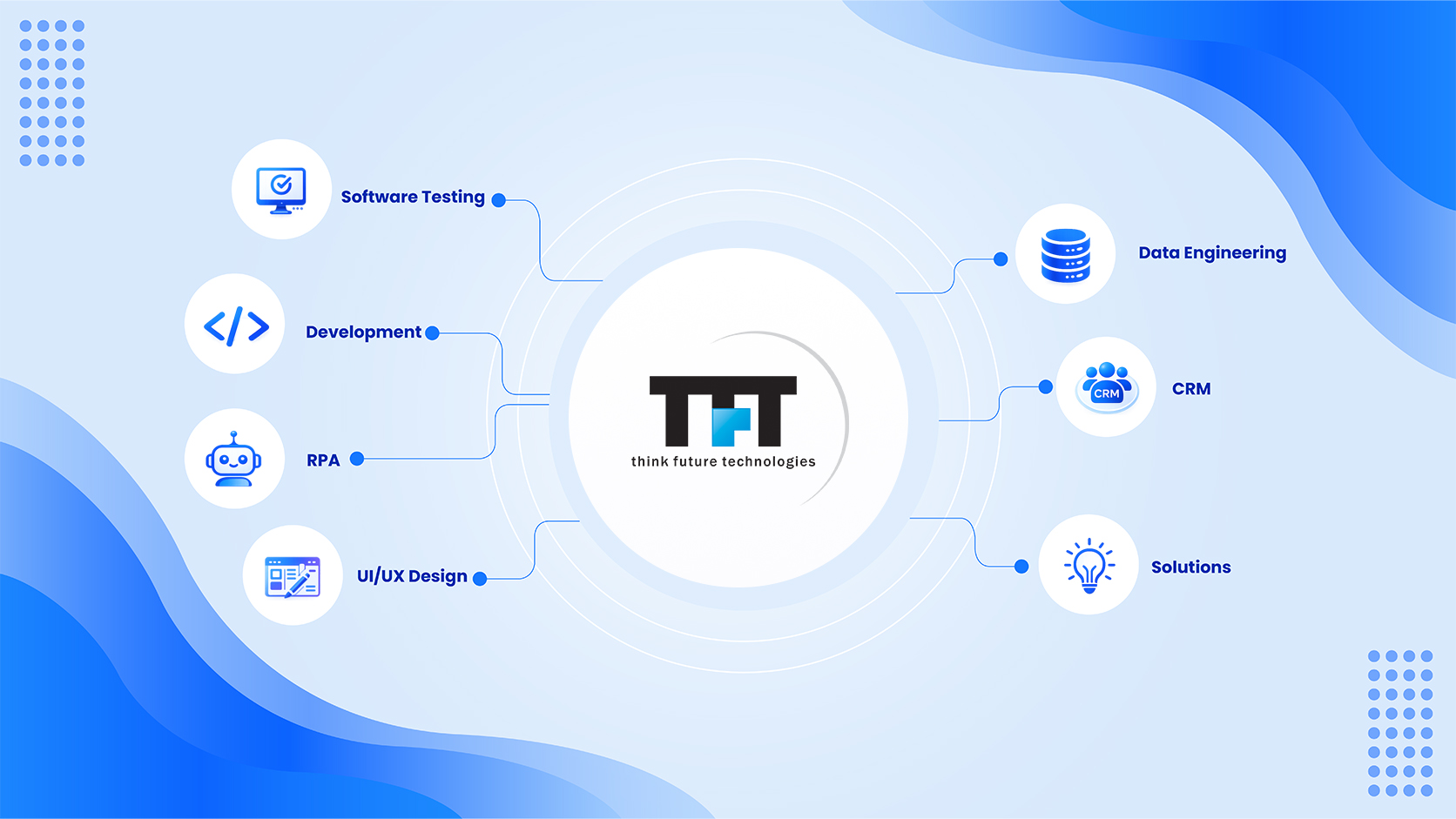
Think Future Technologies is a 19-year-old software and AI services company headquartered in Gurgaon, India, with entities spanning the US, Germany, UAE, Mexico, Israel, and India. The company holds ISO 27001, ISO 9001, and CMMI Level 3 certifications and operates with a team of 550+ engineers, giving it the process maturity and scale of a larger firm while retaining a delivery model built around dedicated teams and long-term client relationships.
Core Services
Custom software development, AI and computer vision solutions, QA and software testing, digital transformation consulting, and go-to-market support for technology buyers entering new regions.
Key Strengths
- Triple certification (ISO 27001, ISO 9001, CMMI Level 3) — a combination not held by most mid-market competitors on this list.
- Multi-country delivery presence, supporting clients who need compliance alignment across the US and EU (GDPR/DSGVO), as well as India and the Middle East.
- Two decades of continuous operation indicate institutional stability rather than a recently assembled team.
- Broad service range spanning custom software, AI-enabled solutions, and independent QA — reducing the need to coordinate multiple vendors.
Typical Pricing Tier
Mid-market rates are generally positioned below large global consultancies and above pure offshore staffing shops, reflecting their certification overhead and dedicated-team delivery model.
Best For
Organizations that need enterprise-grade process discipline and compliance evidence, but want the responsiveness and relationship model of a mid-sized partner rather than a global consultancy.
Note: Specific project outcomes and AI capability claims should be validated directly against TFT’s current case studies and certifications before publication or client-facing use.
2. TechAhead
Founded in 2009 and based in California, TechAhead has spent over 16 years building mobile and web applications for organizations ranging from high-growth startups to global brands, including American Express, Disney, and ESPN. The company has expanded into AI development, generative AI, and enterprise AI platforms alongside its original mobile engineering focus.
Core Services
Custom software and mobile engineering, AI and intelligent systems integration, cloud and DevOps, IoT and connected platforms, and healthcare-specific (HIPAA-aligned) development.
Key Strengths
- Long track record with recognizable global brands, providing strong third-party validation.
- Combined mobile-first and AI integration expertise, useful for consumer-facing products that need both.
- Structured delivery approach: discovery, architecture planning, agile sprints, automated QA, continuous deployment.
Typical Pricing Tier
Mid-market to upper mid-market, reflecting its brand-name client roster and specialized AI practice.
Best For
Consumer and enterprise mobile products that also need AI features integrated without a separate vendor relationship.
3. Zygobit
Zygobit is a newer, fast-growing software development company operating out of India, the US, and Australia, focused on custom software, mobile and web application development, and AI-powered solutions for startups through enterprise clients.
Core Services
Custom software, mobile and web development, machine learning and generative AI, agentic AI services, e-commerce, and digital marketing.
Key Strengths
- Broad modern technology stack (React, Node.js, Python, Flutter, cloud).
- Competitive, transparent pricing aimed at startups and SMBs.
- AI and automation are woven into the core service offering rather than treated as an add-on.
Typical Pricing Tier
Lower mid-market, positioned to be accessible for startups and SMBs.
Best For
Startups and SMBs that want AI capability built in from day one without enterprise-level pricing.
4. Thoughtworks
Thoughtworks is a global technology consultancy founded in 1993, widely recognized for its influence on agile software development practices and its Technology Radar publication, which tracks emerging tools and techniques across the industry.
Core Services
Digital transformation, agile and DevOps consulting, cloud-native development, experience design.
Key Strengths
- Deep thought leadership in agile methodology, often shaping industry practice rather than just following it.
- Global delivery footprint across dozens of countries.
- Strong engineering culture with a long publication history on software craftsmanship.
Typical Pricing Tier
Enterprise consultancy rates are among the highest in this comparison set.
Best For
Large enterprises undertaking agile transformation at scale, where methodology maturity matters as much as code output.
5. Fujitsu
Fujitsu is a century-old Japanese technology company with a global IT services and consulting arm supporting enterprise digital transformation, systems integration, and cloud services.
Core Services
Enterprise software solutions, systems integration, cloud and hybrid infrastructure, managed services.
Key Strengths
- Enormous scale (100,000+ employees globally), enabling very large, multi-year programs.
- Deep legacy systems integration experience.
- Established presence across more than 100 countries.
Typical Pricing Tier
Enterprise consultancy rates, reflecting global scale and long-tenure engagements.
Best For
Enterprise and government clients running large-scale digital transformation programs that must integrate with substantial existing infrastructure.
6. Nous Infosystems
Nous Infosystems is a US-headquartered product engineering and digital transformation company supporting over 2,000 enterprise applications through global delivery centers.
Core Services
Digital product engineering, cloud enablement and modernization, QA and support, UI/UX design.
Key Strengths
- Significant scale in enterprise application support.
- Established global delivery model with dedicated Centers of Excellence.
- Strong track record in modernization projects.
Typical Pricing Tier
Mid-market, with global delivery centers helping offset otherwise higher enterprise rates.
Best For
Mid-to-large enterprises are modernizing a large existing application portfolio.
7. Zymr Inc
Zymr is a Silicon Valley-based software development company specializing in SaaS platform engineering and cloud-native solutions for enterprises and independent software vendors.
Core Services
SaaS and cloud platform engineering, MVP development, UI/UX, and DevOps enablement.
Key Strengths
- Strong SaaS and multi-tenant architecture expertise.
- Security-conscious development practices.
- Silicon Valley engineering standards applied to distributed delivery teams.
Typical Pricing Tier
Upper mid-market, reflecting its Silicon Valley base and SaaS specialization.
Best For
SaaS companies and ISVs building or scaling multi-tenant cloud platforms.
8. Fingent
Fingent is an ISO 27001-certified, New York-headquartered software company providing full-cycle engineering and consulting services with a growing focus on governed AI adoption.
Core Services
End-to-end software development, technology re-engineering, digital transformation, ongoing support, and product lifecycle management.
Key Strengths
- ISO 27001 certification is a meaningful trust signal in this comparison set.
- Strong process re-engineering and automation capability.
- Long-standing enterprise client relationships.
Typical Pricing Tier
Mid-market, with certification overhead reflected in rates above pure offshore competitors.
Best For
Enterprises modernizing legacy processes that need both software delivery and process consulting.
9. IQVIS
IQVIS is a California-based software company focused on building secure, custom products for startups, SMBs, and growing technology organizations, with more than a decade of experience.
Core Services
Custom software and product development, MVP and prototype engineering, application modernization.
Key Strengths
- Strong MVP-to-market execution speed.
- Startup-friendly engagement models.
- Full-stack coverage across web and mobile.
Typical Pricing Tier
Lower-to-mid market, positioned for startup budgets.
Best For
Early-stage companies are validating a product before committing to a larger build.
10. Cleveroad
Cleveroad is an established software development company with 15+ years of experience delivering mobile, web, and enterprise applications across multiple industries.
Core Services
Native and cross-platform mobile development, web application engineering, UI/UX design, cloud-ready backend systems.
Key Strengths
- Long operating history with consistent service scope.
- Balanced design and engineering capability.
- Broad industry coverage.
Typical Pricing Tier
Mid-market.
Best For
Mid-market companies need dependable, design-conscious mobile and web development.
11. Fueled
Fueled is a New York-based digital product development agency known for combining strong design sensibility with engineering execution for consumer-facing and internal business applications.
Core Services
Mobile and web development, UX/UI strategy and product design, long-term platform support.
Key Strengths
- Design-led development approach.
- Strong consumer product portfolio.
- An iterative, growth-oriented delivery model.
Typical Pricing Tier
Upper mid-market, reflecting its design-agency positioning.
Best For
Consumer brands where product design quality is as important as engineering.
12. TELUS Digital
TELUS Digital is the digital solutions arm of TELUS, a major Canadian telecom and technology group, combining software engineering with data, analytics, and customer experience platform services.
Core Services
Digital platform engineering, data and analytics solutions, customer experience platforms.
Key Strengths
- Backing of a large, established telecom parent company.
- Strong data and analytics capability alongside core engineering.
- Enterprise-grade delivery infrastructure.
Typical Pricing Tier
Enterprise, reflecting scale and parent-company backing.
Best For
Enterprises that need customer experience platforms tightly integrated with data and analytics.
13. Cognizant Softvision
Cognizant Softvision combines product design, software engineering, and digital strategy to help organizations build customer-centric digital products across healthcare, banking, retail, and manufacturing.
Core Services
Product engineering, enterprise software solutions, UX/UI design.
Key Strengths
- Backing of Cognizant’s enterprise consulting scale.
- Strong cross-industry delivery experience.
- Design-forward product engineering practice.
Typical Pricing Tier
Enterprise consultancy rates.
Best For
Enterprises that want a large consultancy safety net combined with product design capability.
14. Andersen
Andersen is a fast-growing, Poland-based custom software development company with strong expertise across enterprise software, fintech, and healthcare technology, serving US and European clients primarily.
Core Services
Enterprise development, fintech and healthcare solutions, dedicated development teams.
Key Strengths
- Strong European engineering talent pool.
- Flexible engagement models.
- Deep fintech and healthtech domain focus.
Typical Pricing Tier
Nearshore/mid-market rates for US clients; competitive for EU clients.
Best For
US and EU companies wanting nearshore/offshore European engineering with strong domain specialization.
15. ELEKS
ELEKS provides software engineering, product design, cybersecurity, and data science services to global organizations, recognized for its technical depth and consulting-led approach.
Core Services
Software engineering, data science, cybersecurity services, and enterprise consulting.
Key Strengths
- Strong cybersecurity and data science specialization.
- Consulting-led engagement style.
- Deep technical bench across emerging technology areas.
Typical Pricing Tier
Mid-to-upper market, reflecting specialist consulting positioning.
Best For
Enterprises with complex data or security requirements that need consulting-level technical guidance, not just code delivery.
16. Net Solutions
Net Solutions is an India-based digital product development company helping businesses design, develop, and scale digital products, serving clients from startups to Fortune 500 organizations.
Core Services
Product development, agile delivery, and UX-focused development.
Key Strengths
- Strong UX-first product development process.
- Range from startup to enterprise engagement.
- Long operating history with repeat clients.
Typical Pricing Tier
Mid-market, offshore-adjacent.
Best For
Companies where user experience quality is a primary product differentiator.
17. DockYard
DockYard is a Boston-based digital product consultancy specializing in custom software development, user experience design, and modern web technology, particularly scalable application architecture.
Core Services
Web application development, product strategy, UX design.
Key Strengths
- Deep modern web stack specialization.
- Strong product strategy capability alongside engineering.
- Boutique-scale attention to individual projects.
Typical Pricing Tier
Upper mid-market, boutique consultancy rates.
Best For
Mid-sized companies building complex, modern web applications that want senior-level attention rather than a large account team.
18. Trigent Software
Trigent Software delivers enterprise software solutions, cloud applications, data analytics, and AI-driven products, with decades of experience serving clients across multiple industries.
Core Services
Enterprise software, AI and analytics solutions, quality-focused delivery.
Key Strengths
- Long operating history and enterprise client base.
- Strong analytics and AI integration capability.
- Quality-focused delivery discipline.
Typical Pricing Tier
Mid-market.
Best For
Enterprises seeking a stable, long-tenured partner for analytics-heavy software projects.
19. Azumo
Azumo provides software development services through nearshore engineering teams, specializing in AI development, cloud solutions, and custom application development for US-based clients.
Core Services
AI and machine learning, cloud-native solutions, and nearshore engineering delivery.
Key Strengths
- Nearshore delivery model with real-time collaboration.
- Strong AI/ML specialization.
- Fast team scaling capability.
Typical Pricing Tier
Nearshore rates are below those of onshore US firms.
Best For
US companies want nearshore cost efficiency without sacrificing overlapping working hours.
20. Vention
Vention is a global software engineering company that helps startups and enterprises build high-performing development teams, with extensive experience across fintech, healthtech, e-commerce, and SaaS.
Core Services
Dedicated engineering teams, fast team deployment, and broad technology coverage.
Key Strengths
- Broad technology and industry coverage.
- Fast team assembly and deployment.
- Experience across both startup and enterprise scale.
Typical Pricing Tier
Mid-market, with global delivery flexibility.
Best For
Companies that need to stand up a dedicated engineering team quickly across a range of technology stacks.
21. Itransition
Itransition is a technology consulting and software engineering company with over 3,000 specialists, delivering enterprise-grade applications, cloud solutions, and digital transformation services.
Core Services
Enterprise application development, cloud consulting, digital transformation.
Key Strengths
- Large delivery capacity (3,000+ specialists).
- Broad enterprise application experience.
- Established cloud consulting practice.
Typical Pricing Tier
Mid-to-upper market.
Best For
Large enterprises that need significant delivery capacity across multiple concurrent workstreams.
22. N-iX
N-iX delivers software engineering, cloud migration, data analytics, cybersecurity, and AI development services to enterprises worldwide, with a particular strength in data engineering.
Core Services
Cloud migration, data engineering, cybersecurity, and enterprise software.
Key Strengths
- Strong data engineering and analytics practice.
- Cybersecurity service depth.
- Enterprise-scale cloud migration experience.
Typical Pricing Tier
Mid-market, nearshore-adjacent for European delivery.
Best For
Enterprises undertaking cloud migration with significant data engineering or security requirements.
23. Miquido
Miquido is a Poland-based digital product development company specializing in mobile app development, AI solutions, web development, and product design for startups and enterprise organizations.
Core Services
Mobile applications, AI development, product design, agile delivery.
Key Strengths
- Strong mobile-first product design.
- AI integration is built into the mobile development practice.
- European engineering talent base.
Typical Pricing Tier
Mid-market, European nearshore rates for US clients.
Best For
Mobile-first products that also need AI features, particularly for European market clients.
24. Chetu
Chetu provides software development services across healthcare, finance, hospitality, education, and retail industries, known for delivering industry-specific software solutions through large development teams.
Core Services
Industry-focused custom software, enterprise development, and software customization.
Key Strengths
- Deep vertical-specific engineering teams.
- Large development capacity across many industries.
- Strong customization capability for niche business processes.
Typical Pricing Tier
Mid-market, with rates varying significantly by industry team.
Best For
Companies with highly specific, industry-niche software requirements that generalist vendors struggle to accommodate.
25. Keyhole Software
Keyhole Software is a Kansas-based custom software and legacy modernization firm whose consultants average 17+ years of professional experience, with a fully US-based team supporting real-time collaboration during standard business hours.
Core Services
Custom software development, legacy system modernization, and AI-accelerated development.
Key Strengths
- 100% US-based, senior-heavy team — a differentiator in this comparison set.
- Long client relationships, often extending 10+ years.
- Strong legacy modernization track record.
Typical Pricing Tier
Upper mid-market, reflecting a 100% US-based, senior-heavy staffing model.
Best For
Organizations that specifically require senior, US-based developers with minimal oversight, particularly for legacy modernization work.
Technology Stacks and Specializations to Look For
Not every “top” software development company is strong in every technology. Matching stack expertise to your project reduces risk more than any brand-name reputation.
AI and Machine Learning
Look for vendors who can show production AI deployments — not just proof-of-concept demos. Ask specifically about model evaluation practices, data governance, and how they handle model drift after launch. TFT, TechAhead, Zygobit, Miquido, and Azumo all show AI-focused practices worth evaluating for this stack.
Cloud-Native and DevOps
Cloud-native competence shows up in CI/CD pipeline maturity, infrastructure-as-code practices, and multi-cloud or cloud-agnostic architecture experience. Vendors like Zymr, N-iX, and Itransition emphasize this specialization explicitly.
Mobile Development
Native iOS/Android and cross-platform frameworks (React Native, Flutter) require different expertise profiles. TechAhead, Cleveroad, Fueled, and Miquido all show strong mobile-first portfolios.
Legacy System Modernization
This is one of the hardest specializations to fake — it requires patience, documentation discipline, and experience with systems that can’t simply be rebuilt from scratch. Keyhole Software, Nous Infosystems, and Fujitsu show the deepest modernization track records in this comparison set.
Enterprise Integration (ERP, CRM, EHR)
Integration work is unglamorous but high-stakes — a broken integration can take down business-critical processes. Fingent and Trigent Software both show strength in enterprise integration and process re-engineering.
Data Engineering and Analytics
Vendors with dedicated data engineering practices — as opposed to treating data work as a subset of general development — tend to produce more reliable pipelines at scale. N-iX and Trigent Software stand out here.
The Software Development Lifecycle: What to Expect From a Top Vendor
Understanding what a well-run engagement actually looks like helps you evaluate a vendor’s proposal against a realistic baseline, rather than taking their timeline estimate at face value.
Discovery and Requirements Gathering
A mature vendor spends real time here — typically two to six weeks — clarifying business goals, technical constraints, and success metrics before writing a line of production code. Vendors who skip this step, or compress it into a single call, are optimizing for a fast sale rather than a successful project.
Architecture and Technical Planning
This phase produces the actual technical blueprint: system architecture, data model, integration points, and security design. Ask to see this artifact before development begins — a vendor unwilling to show architecture documentation is a signal to slow down.
Development Sprints
Agile sprints (typically one to two weeks) should produce demonstrable, working increments — not just status updates. Ask how sprint reviews work and whether you’ll see working software regularly, not just at the end of the engagement.
Quality Assurance and Testing
Automated testing coverage, security testing, and performance testing should be built into the process continuously, not bolted on right before launch. Ask what percentage of the codebase is covered by automated tests and how regressions are caught.
Deployment and Launch
CI/CD pipelines should make deployment a routine, low-risk event rather than a high-stress, once-a-quarter production. Ask about rollback procedures and how the vendor handles a failed deployment.
Post-Launch Support and Iteration
The relationship shouldn’t end at launch. Ask explicitly what post-launch support looks like: response time SLAs, ongoing maintenance scope, and how feature iteration is priced and prioritized.
Pricing Models: What a Top Software Development Company Actually Costs
Cost is one of the most searched aspects of this decision, and one of the most misunderstood. Hourly rate alone is a poor comparison metric because it ignores seniority, automation maturity, and how many iterations a team needs to reach a working result.
Enterprise Consultancies and Large Global Firms
Rates typically range from $250 to $500+ per hour, occasionally exceeding $800 per hour for highly specialized strategic engagements. These rates usually bundle project management, architecture consulting, QA, and business analysis into the engagement.
Mid-Market Software Development Companies
Mid-sized firms typically charge $120 to $250 per hour, depending on specialization and project complexity. This tier often delivers the best balance of quality, flexibility, and cost efficiency for most mid-market buyers, and is where a large share of the companies in this guide — including TFT — compete on value rather than the lowest possible rate.
Boutique and Specialized Agencies
Smaller, specialized agencies in the US typically charge $90 to $180 per hour, usually concentrated in a specific industry, technology, or product-development niche.
Nearshore and Offshore Delivery
Eastern European firms typically charge $35 to $80 per hour. Latin American firms typically charge $40 to $90 per hour. Indian and Asia-Pacific firms typically charge $20 to $60 per hour. Many offshore providers, including several profiled above, now match onshore engineering quality while operating at these lower rates — a gap that has closed significantly over the past decade as remote collaboration tooling and process maturity have improved industry-wide.
What Actually Drives Cost Higher
Project Complexity
AI/ML, real-time data processing, financial systems, and healthcare applications require specialized expertise and larger budgets than a standard CRUD application.
Technology Stack
Emerging or highly specialized stacks — generative AI, blockchain, advanced cloud security — cost more because qualified talent is scarcer and in higher demand.
Team Composition
Projects requiring product managers, solution architects, dedicated QA, and security specialists cost proportionally more than a single-developer engagement, but reduce delivery risk substantially.
Compliance Requirements
HIPAA, PCI DSS, GDPR, and SOC 2 compliance all require additional engineering, documentation, and audit work — but reduce long-term risk substantially compared to skipping these investments.
Build vs. Buy: When Custom Software Actually Makes Sense
Before evaluating any vendor, it’s worth confirming that custom software is the right answer at all. Not every business problem needs a bespoke build.
When Off-the-Shelf Software Is the Better Answer
If your requirements closely match a mature, well-supported existing product — a standard CRM, an established accounting platform, a common project management tool — buying and configuring that product is almost always faster and cheaper than building an equivalent from scratch. Custom development only pays off when your workflow, scale, or competitive differentiation genuinely can’t be served by existing tools.
When Custom Software Is the Right Investment
Custom software makes sense when your process is a genuine competitive differentiator, when existing tools force you into workarounds that create real operational cost, or when you need to integrate deeply and reliably across multiple systems in ways that off-the-shelf products don’t support. It also makes sense when the software itself is the product you’re selling, rather than an internal tool supporting some other business.
A Hybrid Approach
Many of the most cost-effective technology strategies combine off-the-shelf platforms for standard functions with custom development focused narrowly on the parts of the business that are genuinely unique. A good software development company — including several profiled in this guide — will tell you honestly when part of your requirement doesn’t need a custom build, rather than defaulting to building everything from scratch to maximize the engagement.
How to Vet a Top Software Development Company Before You Sign
Request Architecture-Level Case Studies, Not Portfolio Screenshots
A portfolio page shows what a product looks like. It says nothing about how it was built. Ask for a case study that includes the actual architecture decisions, the trade-offs made, and the measurable outcome.
Ask for Named References, Not Testimonial Quotes
Testimonials on a website are curated by definition. A vendor confident in its work will connect you with a past client for a direct conversation.
Verify Certifications Directly
Don’t take ISO 27001, ISO 9001, CMMI Level 3, SOC 2, or HIPAA compliance claims at face value. Ask for the certificate or audit summary, and confirm the certification is current and covers the specific team that would work on your project — certifications sometimes apply to only part of a larger organization.
Run a Small Paid Pilot Before Committing
A short, paid pilot project reveals more about communication quality, code standards, and delivery discipline than any sales conversation. Most reputable firms, including several profiled in this guide, will support a scoped pilot engagement.
Clarify IP Ownership and Contract Governance Up Front
Scope creep and intellectual property disputes are among the most commonly cited problems in vendor reviews across Clutch and G2. Your agreement should explicitly define the change management process, milestone acceptance criteria, IP ownership, and an escalation framework before work begins.
Check the Ratio of Senior to Junior Staff
Ask directly what proportion of the team assigned to your project is senior-level. A team that is junior-heavy will take longer to reach the same architectural decisions a senior team reaches quickly, even if the hourly rate looks attractive.
Software Development Company vs. Freelancers vs. No-Code Platforms vs. In-House Hire
Not every project needs a full software development company. Understanding the alternatives — and when they genuinely make more sense — is part of making a good decision, not a distraction from it.
Freelance Developers
Individual freelancers can be a cost-effective option for small, well-defined tasks, but they carry concentrated risk: no backup if the person becomes unavailable, no built-in QA process, and no institutional accountability if something breaks after handoff. Freelancers work well for narrow, short-duration tasks; they work poorly as a substitute for a development company on anything with real architectural complexity or long-term maintenance needs.
No-Code and Low-Code Platforms
Platforms like Microsoft Power Platform, Retool, OutSystems, and Appian can meaningfully accelerate internal tools, admin systems, and simple workflow applications without a full custom build. They are not a substitute for custom software when a project requires deep integration complexity, unusual business logic, or performance at real scale — but combining no-code tooling with custom engineering for the harder parts of a system is an increasingly common, cost-effective strategy that several vendors in this guide will recommend as part of a broader engagement.
In-House Hiring
Building an internal team gives the deepest long-term ownership and institutional knowledge, but it’s the slowest path to a working product and the least flexible if your needs change. In-house hiring makes the most sense when software is a permanent, core part of the business rather than a one-time build.
A Software Development Company
A development company sits between these options: faster to start than in-house hiring, more accountable and process-mature than a freelancer, and capable of far more complexity than no-code tooling. For most mid-to-large custom software projects — the scenario this guide is built around — a development company remains the right default, with the specific vendor selection driven by the evaluation framework above.
Understanding Review Platforms: Clutch vs. G2 vs. GoodFirms vs. Gartner Peer Insights
Third-party review platforms are useful, but each has a different methodology and audience, and treating them as interchangeable can produce a misleading picture of a vendor.
Clutch
Clutch focuses specifically on B2B service providers, including software development companies, and verifies reviews through direct interviews rather than self-submitted text alone. This makes Clutch reviews somewhat more resistant to manipulation than open-submission platforms, though the interview-based model also means Clutch profiles tend to have fewer total reviews than larger platforms.
G2
G2 covers a much broader range of software and service categories, with a larger review volume overall. For development companies specifically, G2 reviews tend to be less detailed on delivery-process specifics than Clutch, but are useful for cross-referencing overall client satisfaction trends.
GoodFirms
GoodFirms operates similarly to Clutch with a research-driven methodology, and is particularly useful for comparing companies by service category and by country, which matters when comparing onshore, nearshore, and offshore options side by side.
Gartner Peer Insights
Gartner Peer Insights skews toward larger, enterprise-scale software and service vendors, making it more relevant when evaluating global consultancies and large-scale enterprise firms than boutique or mid-market development companies.
How to Use These Platforms Together
Cross-reference at least two platforms before drawing conclusions about a vendor. A pattern that shows up consistently across Clutch, G2, and GoodFirms — whether positive or negative — is far more reliable than a strong showing on a single platform alone.
Contract Types Explained: Fixed Price vs. Time & Material vs. Dedicated Team
The contract structure you choose shapes risk allocation, flexibility, and total cost as much as the vendor you choose.
Fixed Price Contracts
Fixed price engagements work best when requirements are thoroughly understood upfront and unlikely to change significantly. This model provides budget certainty, but often at the cost of flexibility — scope changes typically require formal change orders that can slow the project down and add friction to the relationship.
Time and Materials Contracts
Time and materials billing gives clients the flexibility to adjust the scope as the project evolves, paying only for actual work performed. This model suits projects where requirements are expected to change, such as ongoing product development, but requires more active client oversight to manage budget than a fixed price arrangement.
Dedicated Team Contracts
A dedicated team model embeds vendor engineers as an extension of your internal team over an extended period, offering deep product knowledge and consistency over time. This model works particularly well for complex, continuously evolving software that will need long-term development and support — closer to an in-house team than a project-based engagement, without the hiring overhead.
Choosing the Right Contract Type for Your Project
Match the contract type to how well-defined your requirements are, not to which model sounds cheapest on paper. A fixed-price contract for a poorly-defined project usually produces change-order disputes that erase any budget certainty it promised; a time and materials contract for a well-defined, short project can add unnecessary overhead.
8 Red Flags Checklist: Reasons to Slow Down or Walk Away
1. Vague or Unverifiable Case Studies
If a vendor can’t name the client, describe the actual architecture, or provide a measurable outcome, treat the case study as marketing copy rather than evidence.
2. Reluctance to Provide References
A vendor confident in its delivery history will connect you with a past client without hesitation. Reluctance here is one of the clearest disqualifying signals available.
3. No Documented QA or Testing Process
If a vendor can’t describe its testing coverage, CI/CD pipeline, or bug-tracking process in specific terms, assume quality assurance is informal at best.
4. Certifications That Can’t Be Verified
Ask for the actual certificate number or audit summary. A vendor that lists ISO 27001 on its website but can’t produce documentation on request should be treated with real suspicion.
5. Pressure to Sign Before a Pilot
A vendor pushing for a large, long-term contract without supporting a smaller pilot engagement first is prioritizing its own revenue certainty over your risk management.
6. Unclear IP Ownership Terms
If the contract doesn’t explicitly state that you own the code, architecture, and any related intellectual property developed under the engagement, resolve that before signing — not after a dispute arises.
7. A Team That Changes Constantly
High staff turnover on your project — different developers rotating in every few weeks — erodes institutional knowledge and slows delivery, even if each individual is competent. Ask directly about expected team stability for the duration of your engagement.
8. Estimates With No Range or Contingency
A single, precise-looking number with no acknowledged uncertainty is often a sign of either inexperience or a sales tactic. Mature vendors typically present a range and explain what would move the project toward either end of it.
Pre-Contract Checklist
Before signing with any software development company, confirm you have documented answers to the following:
- Current, verifiable certifications relevant to your project (ISO 27001, ISO 9001, CMMI, SOC 2, HIPAA readiness).
- At least one direct reference conversation with a past client in a comparable industry or project type.
- A clear architecture-level case study, not just portfolio screenshots.
- Explicit IP ownership terms covering all code, architecture, and related deliverables.
- A defined QA and testing process, including automated test coverage expectations.
- A named, stable point of contact and an escalation path for issues.
- A realistic timeline with acknowledged ranges, not a single overconfident date.
- Clarity on post-launch support scope, response time SLAs, and how future iterations are priced.
- A contract type (fixed price, time and materials, or dedicated team) matched to how well-defined your requirements actually are.
Choosing a Software Development Company by Industry
Healthcare
Prioritize vendors with demonstrated HIPAA-aligned development experience, EHR integration history, and a documented secure SDLC. TechAhead, Fingent, and TFT all show relevant healthcare or compliance-adjacent experience worth evaluating further for regulated projects.
Fintech
Fintech buyers should weigh security certifications and payment system integration experience heavily. Andersen, Vention, and N-iX show strong fintech-adjacent delivery experience.
SaaS and B2B Software
SaaS companies scaling multi-tenant architecture should look closely at vendors with dedicated cloud-platform engineering practices, such as Zymr and Vention.
Enterprise and Legacy Modernization
Organizations modernizing large, older systems should prioritize firms with explicit modernization track records: Keyhole Software, Nous Infosystems, and Fujitsu all specialize here.
Startups and Early-Stage Products
Early-stage companies validating a product should prioritize speed to MVP and flexible engagement models over enterprise scale — IQVIS, Zygobit, and Fueled are built around this stage.
Retail and E-Commerce
E-commerce platforms need vendors comfortable with payment gateway integration, inventory system connections, and traffic spikes around seasonal demand. Zygobit’s e-commerce practice and Cleveroad’s cross-platform mobile experience are both relevant here.
Manufacturing and Industrial
Manufacturing software often involves IoT integration, legacy equipment connectivity, and operational technology constraints that differ significantly from typical business software. TFT’s computer vision and QA practice and Fujitsu’s legacy integration depth are both relevant starting points for this vertical.
Which Company Should You Choose? 5 Buyer Scenarios
Rather than treating every profile above as equally relevant, here’s how the evaluation framework applies to five common buyer situations.
Scenario 1: A Healthcare Startup Building Its First Product
Priorities: HIPAA-aligned development experience, a secure SDLC, and a vendor comfortable working with a startup timeline and budget rather than an enterprise engagement model. TechAhead’s HIPAA-aligned development practice and TFT’s certification-backed process discipline are both worth a first conversation; IQVIS is worth including for its MVP-speed track record if budget is the binding constraint.
Scenario 2: An Enterprise Modernizing a 15-Year-Old Core System
Priorities: documented legacy modernization experience, patience with incremental migration, and a large enough team to run parallel workstreams without risking the production system. Keyhole Software, Nous Infosystems, and Fujitsu are the strongest starting points, with TFT worth including for organizations that also want ISO/CMMI-backed process documentation throughout the migration.
Scenario 3: A SaaS Company Scaling From 500 to 50,000 Users
Priorities: multi-tenant architecture expertise, cloud-native scalability experience, and DevOps maturity that can support rapid, safe deployment as load increases. Zymr, Vention, and N-iX all show direct relevance here.
Scenario 4: A Mid-Market Company That Needs AI Features Added to an Existing Product
Priorities: AI integration experience with existing systems (not just greenfield AI builds), and a vendor who can explain model evaluation and drift management in specific technical terms rather than marketing language. TFT, TechAhead, Zygobit, and Miquido are the strongest fits for this scenario.
Scenario 5: A Cost-Sensitive Project With a Well-Defined, Narrow Scope
Priorities: transparent offshore or nearshore pricing, and a vendor with enough process maturity (certifications, documented QA) to offset the communication distance inherent in remote delivery. TFT’s certification profile, Andersen’s European nearshore positioning, and Azumo’s nearshore delivery model are all relevant starting points.
Choosing a Software Development Company by Industry: Two More Verticals
Education Technology
EdTech projects often involve accessibility compliance (WCAG), integration with learning management systems, and usage patterns that spike around academic calendars. Net Solutions’ UX-first development approach and Zygobit’s broad modern stack are both relevant starting points for this vertical.
Logistics and Supply Chain
Logistics software frequently requires real-time data processing, IoT device integration, and resilience against connectivity gaps in warehouse or field environments. TFT’s computer vision practice and N-iX’s data engineering depth are both relevant to this vertical’s technical demands.
A Glossary of Terms You’ll Encounter While Evaluating Vendors
MVP (Minimum Viable Product)
The smallest version of a product that can be released to validate core assumptions with real users, before investing in the full feature set.
SLA (Service Level Agreement)
A contractual commitment defining response times, uptime guarantees, and support scope — critical to clarify before signing, not after an incident occurs.
CI/CD (Continuous Integration / Continuous Deployment)
An automated pipeline that tests and deploys code changes frequently and reliably, rather than through large, infrequent, high-risk releases.
Technical Debt
The accumulated cost of shortcuts taken during development that will need to be addressed later — often invisible until a system needs to scale or change significantly.
Secure SDLC (Software Development Lifecycle)
A development process with security practices built into every phase — architecture, coding standards, testing, deployment — rather than treated as a final pre-launch check.
Staff Augmentation
An engagement model where a vendor provides individual developers who integrate into your existing team and process, as distinct from a vendor that owns full project delivery.
How to Write an RFP for a Software Development Company
A well-structured request for proposal produces more comparable, useful vendor responses than an informal conversation — and it forces internal clarity on requirements before you’re negotiating with a vendor’s sales team.
Problem Statement and Business Context
State the business problem you’re solving, not just the feature list. A vendor who understands why the project matters will make better architecture recommendations than one who only sees a checklist of requirements.
Technical Requirements and Constraints
Document known technical constraints: existing systems that must be integrated, compliance requirements, preferred or required technology stack, and any performance or scale requirements you already know about.
Evaluation Criteria
Tell vendors explicitly how you’ll evaluate proposals — price, technical approach, team composition, timeline, references — so responses are structured around what actually matters to your decision rather than each vendor’s own template.
Budget Range
Providing a realistic budget range, even an approximate one, produces far more useful proposals than omitting it. Vendors forced to guess your budget either overshoot to protect margin or underscope to win the deal — neither serves you well.
Timeline Expectations
State your target timeline and any hard deadlines. A realistic timeline discussion early avoids the common failure mode where a vendor agrees to an unrealistic date during sales, then quietly slips it during delivery.
Submission Requirements
Specify exactly what you want in a response: team composition and seniority breakdown, relevant case studies, references, a draft project plan, and a detailed cost breakdown — not just a total number. This makes proposals genuinely comparable side by side.
Timezone and Communication Considerations by Delivery Region
US and Canada (Onshore)
Full working-hour overlap with US-based teams, the easiest model for real-time collaboration and rapid iteration, typically at the highest price point in this comparison set.
Latin America (Nearshore for US Clients)
Significant working-hour overlap with US time zones — often near-total overlap for East Coast clients — combined with meaningfully lower rates than onshore US firms.
Eastern Europe (Nearshore for European Clients, Offshore for US Clients)
Strong overlap with European business hours and a partial overlap with US East Coast mornings, combined with a deep, well-established engineering talent pool.
India and South Asia (Offshore for US and European Clients)
Minimal same-day working-hour overlap with US Pacific time in particular, requiring more deliberate communication cadence — structured handoffs, asynchronous documentation, and overlap windows scheduled deliberately — but offering the largest cost advantage and among the deepest technical talent pools globally, including many firms carrying the same ISO 27001 and CMMI certifications held by top-tier onshore providers.
Managing Time Zone Gaps Successfully
Regardless of region, successful distributed engagements share common practices: clearly documented requirements and decisions (not just verbal agreement), a defined daily or weekly overlap window for real-time discussion, and a single accountable point of contact on the vendor side rather than a rotating cast of communicators.
Global Compliance Considerations for Cross-Border Software Projects
If your business operates across multiple regions, your development vendor needs to understand more than one regulatory framework — and this is an area where certification depth genuinely matters.
GDPR and DSGVO (European Union)
Any product handling personal data of EU residents needs to be built with data protection by design: explicit consent mechanisms, data minimization, and a documented legal basis for processing. Vendors with established European delivery presence or GDPR-specific project experience — including several profiled in this guide — reduce the risk of retrofitting compliance after launch.
CCPA and US State Privacy Laws
US privacy regulation is increasingly fragmented at the state level, with California’s framework often used as the practical baseline toward which vendors design, even for companies not directly regulated by it. Ask any shortlisted vendor how they handle data subject access requests and deletion requirements technically, not just contractually.
HIPAA (United States Healthcare)
HIPAA compliance touches both technical safeguards (encryption, access controls, audit logging) and administrative processes. A vendor’s HIPAA experience should extend to designing systems with these safeguards from the architecture stage, not adding them as a checklist item before launch.
Industry-Specific and Regional Frameworks
Depending on your industry and geography, you may also need to account for frameworks like PCI DSS (payment card data), SOC 2 (service organization controls), or regional data localization requirements that affect where infrastructure can physically reside. A vendor with multi-country delivery experience — such as several profiled in this guide, including TFT’s presence across the US, Germany, UAE, Mexico, Israel, and India — is generally better positioned to navigate overlapping compliance requirements than a single-region vendor encountering them for the first time.
Why This Matters for Vendor Selection
Compliance gaps discovered after launch are dramatically more expensive to fix than gaps addressed during architecture planning. When comparing proposals, weight a vendor’s demonstrated compliance experience in your specific regulatory context as heavily as its technical capability — the two are not separable in a regulated project.
Start With the Right Software Development Partner
The right software development company is defined less by size or marketing polish and more by demonstrated engineering depth, verifiable compliance evidence, and a delivery process that holds up under real project pressure. Use the comparison table and evaluation framework in this guide to build a shortlist matched to your specific project — regulated industry, startup speed, legacy modernization, or enterprise scale — rather than defaulting to whichever name appears first in a generic search.
Think Future Technologies combines the process maturity of a much larger firm — ISO 27001, ISO 9001, and CMMI Level 3 certification, 550+ engineers, and delivery presence across six countries — with the responsiveness of a mid-sized, relationship-driven partner. For organizations weighing that balance against the other companies profiled in this guide, a direct conversation about your specific project requirements is the fastest way to find out if it’s the right fit.
Whatever vendor you ultimately choose, the underlying discipline is the same: define what “top” means for your specific project before you start comparing companies, verify every claim a vendor makes rather than taking marketing language at face value, and start with a scope small enough to reveal real evidence of how the relationship will actually work before committing to a larger engagement. That process takes longer than picking the first name in a search result — but it’s the difference between a vendor relationship that compounds in value over years and one that becomes a costly lesson in what to check more carefully next time.
Conclusion
Choosing the right software development company isn’t about finding the biggest brand or the lowest quote—it’s about finding the partner that’s best equipped to solve your business challenges.
The companies featured in this guide each bring different strengths, whether it’s AI expertise, enterprise-scale delivery, legacy modernization, cloud-native engineering, or startup-focused product development. The key is to match their capabilities with your project goals, industry requirements, budget, and long-term vision.
Before making a final decision, shortlist a few vendors, verify their certifications and client references, review real-world case studies, and consider starting with a small pilot engagement. A little extra due diligence today can save months of delays, unexpected costs, and technical debt down the road.
The best software development partnerships are built on transparency, technical excellence, and shared business objectives—not marketing claims. Use this guide as your evaluation framework, ask the right questions, and choose a partner that can grow alongside your business for years to come.
Frequently Asked Questions
How much does it cost to hire a top software development company?
Costs range widely by tier: boutique and offshore firms often start around $20–$90 per hour, mid-market firms typically charge $120–$250 per hour, and large global consultancies can exceed $500 per hour. Total project cost depends more on complexity, compliance requirements, and team composition than on hourly rate alone.
What is the typical timeline for a custom software project?
Discovery and architecture planning generally takes 2–6 weeks. MVP development typically takes 3–6 months. Mid-scale platforms often take 6–12 months, and complex enterprise-grade systems can take well over a year. Projects that skip structured discovery tend to experience delays later in the process.
How do I know if a vendor's security claims are real?
Ask for the actual documentation: ISO 27001 or SOC 2 audit reports, HIPAA compliance evidence, secure SDLC documentation, and details of the incident response framework. A vendor with mature security practices will produce these on request without hesitation.
Should I choose an onshore, nearshore, or offshore development company?
It depends on your priorities. Onshore offers the tightest time zone alignment and easiest real-time communication. Nearshore balances cost savings with overlapping working hours. Offshore typically offers the largest cost savings and access to the deepest talent pools, provided the vendor has strong process discipline and relevant certifications to offset the communication distance.
What's the difference between a software development company and a staffing agency?
A software development company typically owns delivery outcomes — architecture, QA, project management — as part of the engagement. A staffing agency primarily places individual developers into your existing team and process, with less ownership over delivery quality. Clarify which model you're actually buying before signing, since pricing and accountability differ significantly between the two.
How many companies should I shortlist before deciding?
Most buyers get diminishing returns past three to four shortlisted vendors. Use the evaluation framework in this guide to narrow your list, then run a small paid pilot with your top one or two choices before committing to a larger engagement.
Is a bigger software development company always a safer choice?
Not necessarily. Larger firms bring scale and stability but can also mean less senior attention on your specific project, more layers of account management, and higher rates. Mid-sized firms with strong certifications, like several profiled in this guide, often deliver comparable process rigor with more direct access to senior engineers.
What questions should I ask in a first vendor call?
Ask how they run discovery, what their QA process looks like in specific technical terms, what percentage of the proposed team is senior-level, whether they can provide references from your industry, and what their approach is to scope changes mid-project.
Can a software development company help with an existing, half-built product?
Yes — this is a common engagement type. Ask specifically about the vendor's code audit process, since taking over an existing codebase requires a different starting discipline than greenfield development, including a technical debt assessment before committing to a timeline.
How do I compare proposals that quote very different prices for the same project?
Compare scope, not just price. A lower quote often reflects a narrower definition of "done," fewer QA cycles, or a junior-heavy team. Ask each vendor to itemize what's included — discovery, QA, post-launch support — so you're comparing equivalent deliverables rather than headline numbers.
What happens if the relationship isn't working after a few months?
A well-structured contract should include a defined exit and transition clause covering how code, documentation, and access credentials are handed over if either party ends the engagement early. Ask about this explicitly before signing, since it's much harder to negotiate cleanly once a relationship has already soured.
Does company size correlate with project success?
Not directly. Company size correlates more reliably with the type of project a vendor is set up to handle well — very large firms are often better suited to very large, multi-year programs, while mid-sized and boutique firms often deliver more senior attention per dollar on focused projects. Match size to project type rather than treating "bigger" as inherently "better."
Should I sign a long-term contract or start with a smaller engagement?
Unless you already have strong, verified evidence of a vendor's delivery quality — direct references, a completed pilot, or a long working history — start smaller. A short, well-scoped initial engagement gives you real evidence of how the vendor communicates, estimates, and handles the inevitable surprises that come up in any software project, before you commit to a larger relationship.

Leave a Reply