

When it comes to hiring a React developer, it’s not just about technical skills. The top hire is a good communicator and a quick learner. Soft skills make the difference in long-term success.
According to a study by Leadership IQ, only 49% of employee success is due to technical skills. The remaining items are based on adaptability and teamwork. Soft skills evaluation is required.
This guide provides hiring managers with a comprehensive overview of important soft skills and interviewing skills, along with a pre-made scoring system.
Why 4 Soft Skills Matter More Than Ever in ReactJS Hiring?
1. React Developers work in teams
React developers work closely with designers, backend developers, and project managers every day. Even the best code can come to a halt due to poor communication among team members.
2. The Data Backs This Up
According to the Stack Overflow 2024 Developer Survey, teamwork and communication are at the top of the list for engineering managers when hiring, with 73% citing them. Only 54% give technical skills as their top answer.
3. Relying on Coding Challenges Alone Is Costly
According to research by Leadership IQ, hiring managers who rely solely on coding challenges experience 41% higher new-hire turnover after 18 months. Structured Soft Skills Assessment reduces that risk substantially.
4. The Takeaway
One of the best investments a recruitment team can make is a soft skills evaluation.
The 5 Most Critical Soft Skills to Assess in ReactJS Developers
Not all soft skills weigh equally. As your ReactJS development team grows and your project becomes more complex, some of them may become critical.
According to a 2025 ScienceDirect analysis of software engineering job advertisements, companies identified 36 distinct soft skills as critical requirements for software development roles.
1. Communication Skills
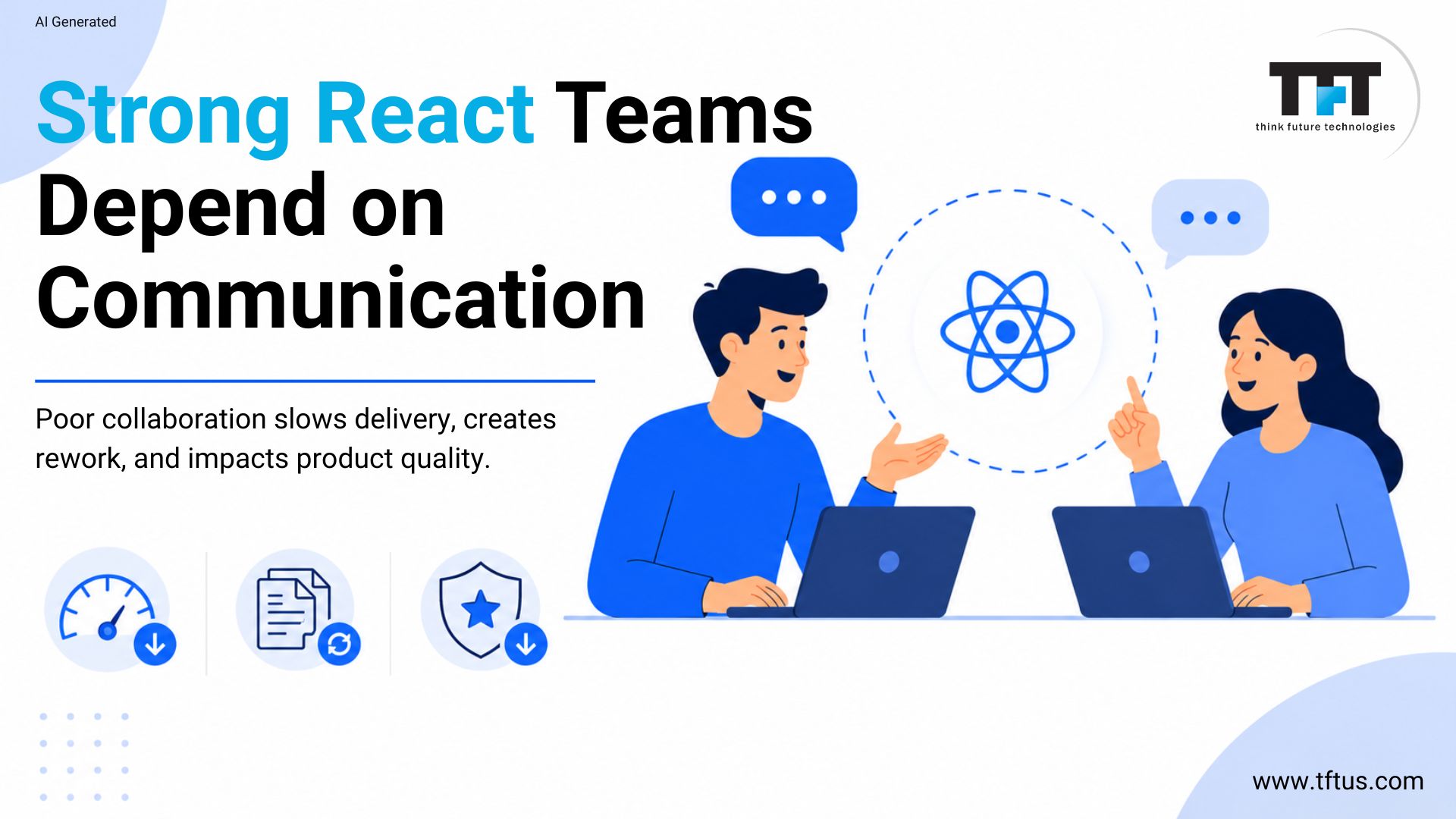
No matter what a ReactJS developer’s role is, clear communication cannot be compromised. ReactJS developers communicate with non-technical users and work with designers to create user interfaces. There is a lack of communication leading to missed requirements and rework.
Strong communicators respond to questions, but more than that. They identify blockers early, ask clarifying questions, and tailor their style for different audiences. This is particularly important when team members are located in different time zones.
In interviews, have candidates describe a past project they worked on. Listen for “the big picture”. Clear speakers make clear teammates.
2. Problem-Solving Abilities
One of the most apparent skills in the world of daily React development is problem-solving. There are times in every JS developer’s life when they have to deal with bugs, changing priorities, and not-so-clear requirements. They don’t just have to master the basics of React; how they address the ambiguity is necessary.
Good problem solvers find the cause of a bug. They record it and prevent it from happening again with the team. That attitude directly impacts a business’s long-term success.
Ask behavioral questions during an interview. Have a candidate take a technical blocker and walk it through carefully, point by point. They show their logical thinking in the detail of their answer.
3. Adaptability and Continuous Learning
The React library is changing rapidly. The state management libraries, build tools, and testing libraries all receive periodic releases. The ReactJS developer who is reluctant to change becomes a burden in a very short time.
A skill that is sadly underestimated but crucial is continuous learning. Pay attention to candidates who reference recent courses, GitHub contributions, or hands-on experimentation with new technologies. That’s a true sign of curiosity.
Inquire about any new innovations they have learned about over the last six months. A strong React developer will provide specific responses. Young developers who are genuinely learning can outperform seasoned developers who are potters.
4. Collaboration and Teamwork
There is a need for team development in the React process. ReactJS developers collaborate, exchange components, and contribute to backend developers to integrate with APIs. A developer who doesn’t collaborate slows down the entire team.
Readable, maintainable code is good teamwork. It is the way to provide constructive code review suggestions and comprehend the impact of one React component on others in the application.
Be attentive to the language used in interviews. Those who say “we” and “our team” are natural team players who do it for the team. It is often hard to work with people who only say the word “I”.
Case Study: How Soft Skills Improved React Team Performance
Medical education startup Quesmed rebuilt its React.js development team using a structured hiring process that evaluated collaboration, adaptability, and communication alongside technical ability.
The company later achieved a 100% increase in sales, expanded globally across 20 countries, and scaled to over 10,000 daily active students. This demonstrates how strong soft skills directly contribute to better collaboration, faster product development, and long-term business growth.
(Source: Quesmed Case Study)
5. Emotional Intelligence and Feedback Handling
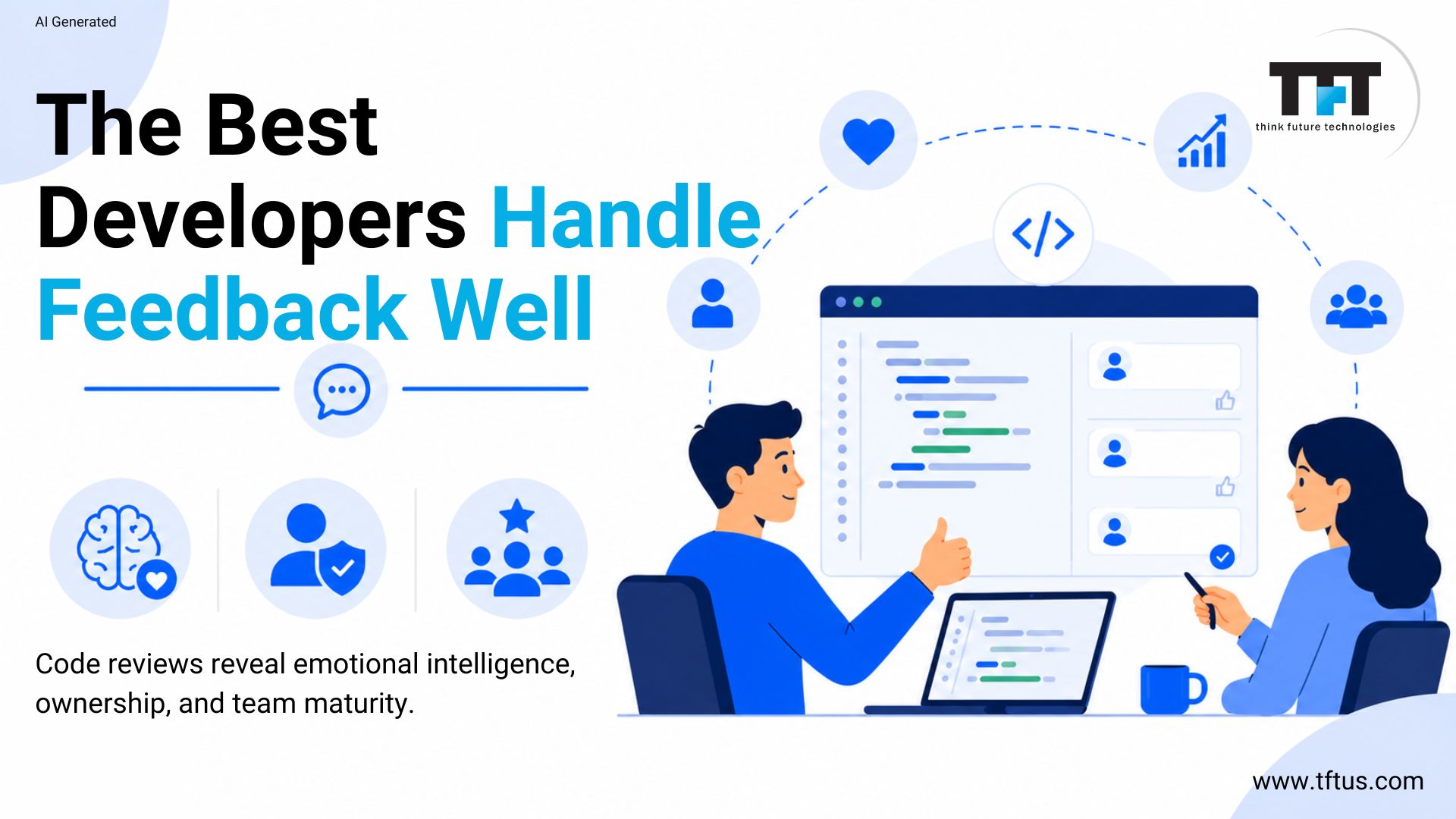
What makes great teammates out of good React developers is their emotional intelligence. A JS developer who can’t handle feedback can’t do code reviews and causes friction. This diminishes quality and reduces team spirit in the long run.
High EQ candidates are given critical feedback in an inquiring manner. They thoughtfully ask questions, reflect, and make changes. This is key in agile teams where code review occurs on a per-sprint basis.
Have candidates explain an instance in which they received negative feedback on their code. Good candidates give an explanation of what they have learned. Good candidates describe what they have learned. If the candidate deflects the blame and becomes defensive, it is a real red flag.
How to Structure Your Hiring Process to Evaluate Soft Skills?
Technical skills are most often emphasized in the hiring process, and soft skills are reserved for the last interview. That’s a very incomplete method.
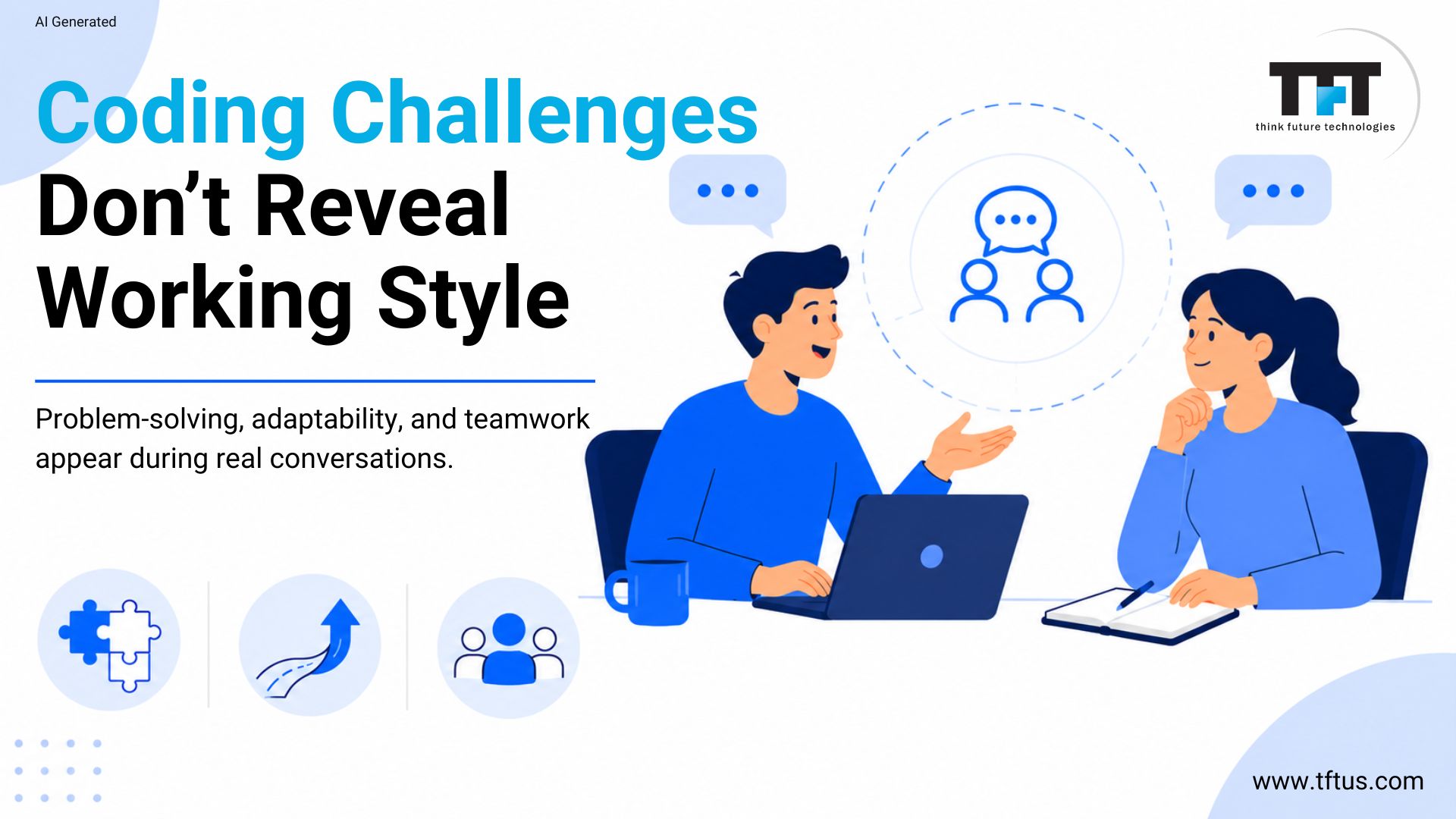
A smarter way incorporates soft skills evaluation at each stage. Include behavioral questions on the screening call. Watch the communication in action during the live coding session. Discuss with your team after every round.
This episode explores structured and predictive approaches to evaluating soft skills during technical hiring and recruitment processes.
Here is a practical 4-stage process that strikes a balance between the two.
Stage 1: Screening Call
Assess communication and motivation during the first 20 minutes. Seek candidates’ input about their latest position as a React developer and the project they completed. Listen for understanding, interest, and whether they describe their work in simple terms.
In this stage, ask one behavioral question. One good answer is: “Describe a situation when something changed about a project during the sprint. What did you do when you heard that?” This is an expression of the candidate’s ability to bend without any technical skills. It also lets the candidate know your team values soft skills.
Eliminate individuals who have a poor grasp of writing effectively about past work. It’s like this: If they don’t communicate well in a 20-minute call, they won’t communicate well during daily stand-ups.
Stage 2: Technical and Soft Skills Assessment
Apply coding challenges that represent actual project needs. Assign the candidate a task similar to the one that the ReactJS developer requires. Avoid abstract puzzles that ask you to only memorize the React fundamentals.
Have one or more open-ended problems with more than one correct answer. Discuss with the candidate how they will approach the problem before coding begins. This reveals logical thinking not only in the final output.
Go through a live coding session with another ReactJS developer. Observe the candidate’s reaction to a “stuck” moment. Do they seek assistance, or do they become paralyzed? That shows a problem-solving attitude and confidence to be vulnerable in front of peers.
Stage 3: Behavioral Interview
The behavioral interview is the most crucial part of assessing soft skills in ReactJS jobs. Follow the STAR approach (Situation, Task, Action, Result). Request that candidates provide specific examples from projects rather than hypothetical ones.
Let’s look at five behavioral questions that consistently reveal soft skills in candidates who are applying for a position as a ReactJS developer:
- “Explain a situation when you have been in disagreement with an opposing teammate regarding a technical solution. What happened?”
- “Describe a project in which requirements changed drastically. How did you cope with that?
- “Provide an example of explaining a complex React concept to a non-technical stakeholder.
- “When you don’t agree with a comment, what do you do?
Tell about a time you mentored another developer or coached someone on your staff who was stuck.
Interpret your results to look for specifics and honesty. Candidates who give vague answers or only describe perfect outcomes are not being transparent. The right candidates for the job in the React developer world discuss their failures and lessons learned.
Stage 4: Team Debrief and Cultural Fit Review
Conduct a structured debrief session at the end of the interview with all those involved in the interview process. Have each person use a 1-5 scale to rate the candidate on communication, adaptability, and collaboration skills. Don’t discuss the scores until you’ve collected them to prevent group thinking from affecting the ratings.
The word ‘Cultural fit’ is not synonymous with finding someone who is exactly the same as the team that you’re about to join. It’s the search for someone with a working style that matches your ReactJS development team’s. Some developers are better suited to working independently, and others are better suited to working in a team.
Utilize reference checks to pose specific soft skill questions. Inquire with previous managers how the candidate dealt with feedback and worked with designers/back-end developers. A targeted reference-check question will go much deeper than a rehire question.

The STAR-R Soft Skills Scoring Framework
Most hiring managers use technical skills rubrics, whereas soft skills are judged by a hiring manager’s intuition. This leads to inconsistent, biased hiring decisions.
The STAR-R framework rates candidates on five transparent dimensions. Situational clarity, responsibility for the task, quality of action, impact of the result, and reflection depth. A score from 1-5 is given for each dimension. A score of 20 or higher is a clear indicator of good soft skills throughout.
| Dimension | What to Listen For |
| Situation Clarity | Can they describe context concisely? |
| Task Ownership | Did they take clear responsibility? |
| Action Quality | Were their steps logical and proactive? |
| Result Impact | Did their actions lead to a measurable outcome? |
| Reflection Depth | Did they share what they learned? |
Apply this scorecard to all candidates to create a level playing field and make comparisons easier.
Case Study: Structured Soft Skills Evaluation in Enterprise React Hiring
Israeli IT services company Aman Group implemented a structured hiring process for React.js developers that evaluated communication, ownership, adaptability, and collaboration in distributed enterprise teams.
Using this approach, the company successfully placed 40+ senior engineers across four countries for enterprise fintech, telecom, and cybersecurity projects. The case highlights how structured soft skills assessment improves long-term hiring quality in complex enterprise environments.
(Source: Aman Group Case Study)
Red Flags to Watch for When Evaluating ReactJS Developer Candidates
No Mention of Failure
All I can say is that experienced React developers make mistakes. If a candidate has absolutely no blemish on their record, then they are either not being truthful or simply don’t know or understand how to develop.
Blaming Teammates for Everything
Those with a victim mentality lack accountability. If a ReactJS developer can’t take responsibility for the failure, then he or she will do the same with you.
3 Common Mistakes Hiring Managers Make When Evaluating ReactJS Developers
1. Over-Relying on the Live Coding Session
The Live Coding Session is only one data point. When scoring becomes the only thing that really matters, technically strong, socially hard candidates have an unfair edge.
2. Using the Same Questions for Every Seniority Level
The soft skills of Junior and Senior React developers are in very different stages. Craft behavioral interview questions for the real-life needs of the projects.
3. Skipping Reference Checks
A focused soft skills and collaboration pattern reference check only requires about 15 minutes and always uncovers what the interview doesn’t.
Why This Matters for Business Success at Scale
According to HackerEarth’s 2025 recruiting trends analysis, companies are increasingly evaluating emotional intelligence, adaptability, and communication skills alongside technical expertise during developer hiring.
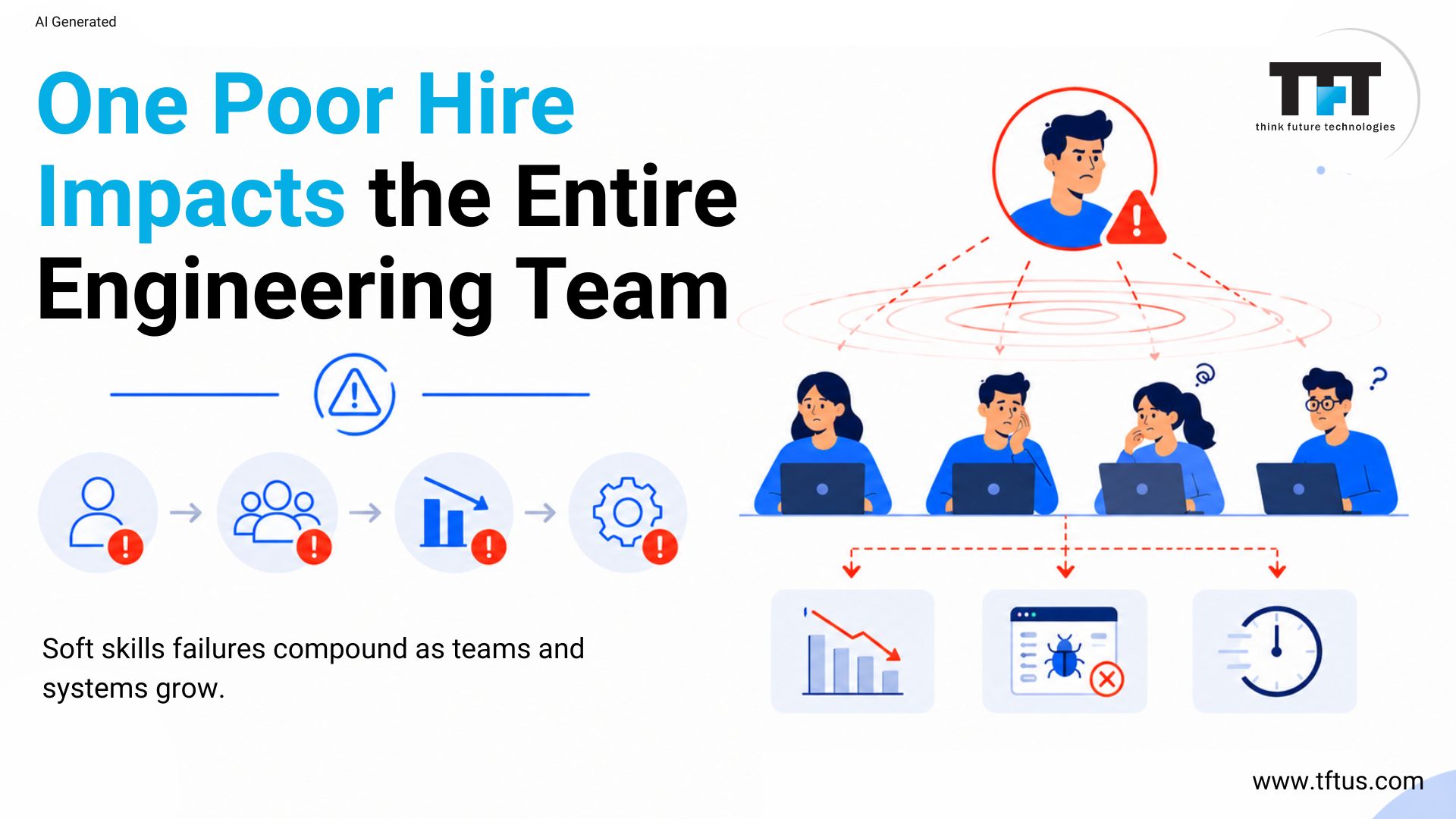
- Soft Skills Failures Compound at ScaleOne ReactJS developer with bad soft skills can kill a team of 10. When there are 25-100 developers, conversations slow down, and information silos grow, causing the cost and impact of communication breakdowns to compound.
- US Teams Feel It in ProductivityOnboarding friction, rather than technical skill, is the number one pain point for delivery speed for companies in San Francisco, Austin, and New York.
- Return on Investment in Soft Skills AssessmentDealing with soft skills issues up front will save dozens of hours spent resolving conflict and performance issues later. This has a direct impact on product velocity and business outcomes.
Practical Soft Skills Checklist for Hiring ReactJS Developers
When you are hiring a React developer, please use this checklist:
- Was the candidate clear and concise in his/her communication in all aspects?
- Would they be able to describe previous projects without too much technical jargon?
- Did they mention at least one failure and what they learned from it?
- Would they have taken responsibility for the results in their behavioral responses?
- Were they interested in new technologies and ongoing learning?
- Did they ask in-depth questions about your ReactJS development team and project?
- Was there composure and clear thinking during the live coding session?
- Were there any positive observations that were shared independently by your team members?
- Were the references asked for, and did they verify that they worked with them as a team and that they gave feedback?
When you can mark 9 out of 9 boxes with confidence, you’ve discovered a recruit who is a solid choice to hire.
Conclusion
An assessment of soft skills for ReactJS hires is what makes a good hire great! Technical skills bring candidates to the interview; soft skills are what make them successful on your team and successful in your business. Implementing the frameworks, questions, and checklists outlined in this guide will help you create a comprehensive, accurate hiring process for each ReactJS developer role.
FAQs
-
 jyoti mishra
 - September 16, 2026
Hire MEAN Stack Developer India: Expert Full-Stack Programmers for Your Project
Businesses building modern web applications need a technology stack that moves fast without breaking under real-world load. That is exactly…


Leave a Reply