
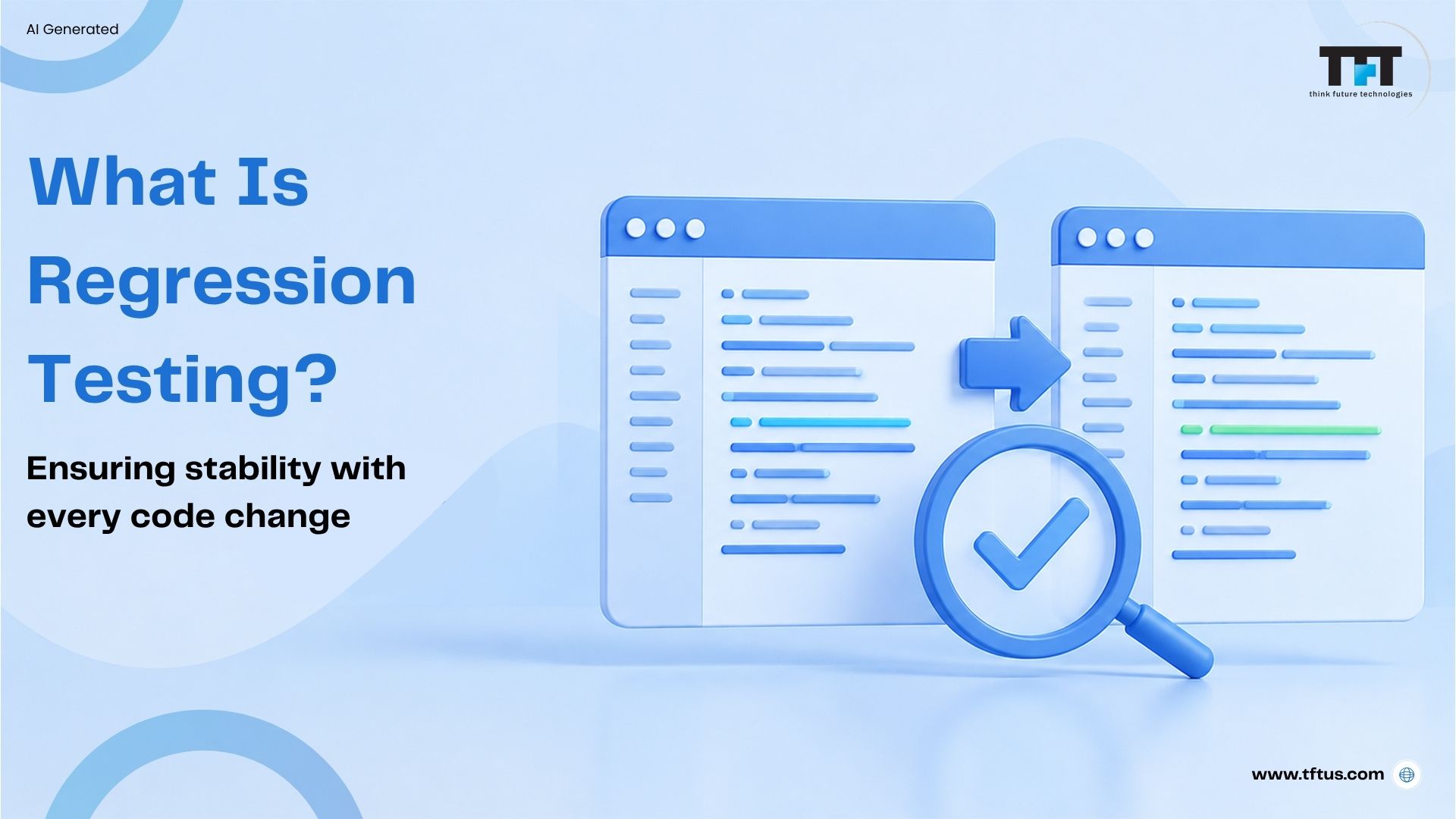
Software continually evolves. Each feature, bug fix, or update introduces the risk of disrupting previously functioning elements.
It verifies that code changes do not degrade existing functionality, enabling teams to preserve software stability throughout development.
It is widely recognized as a critical validation step in which previously executed test cases are rerun after code changes to ensure no new defects are introduced (Source: IBM Think Topics).
What is Regression Testing ?
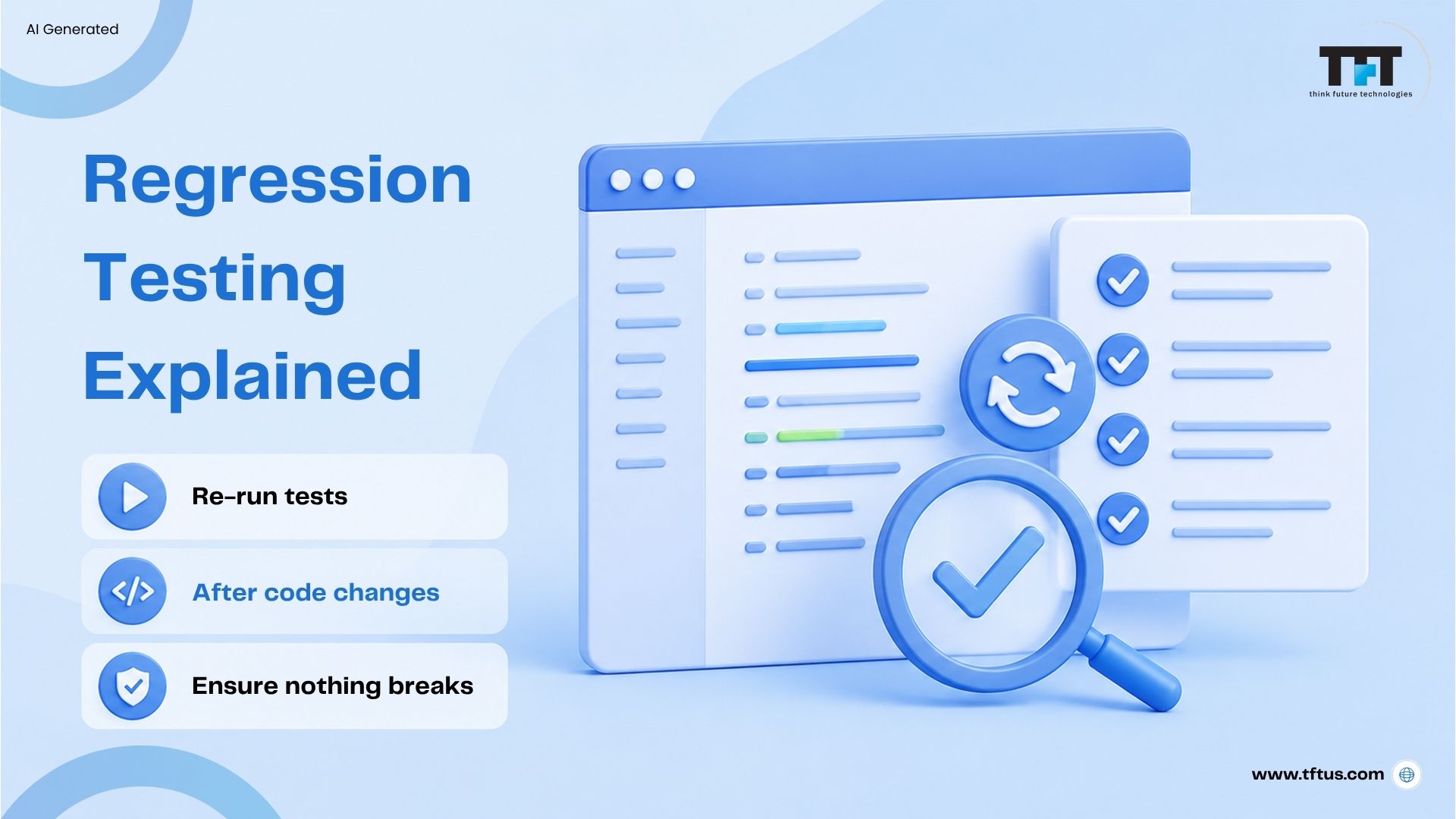
It is the act of rerunning existing test cases in the software to confirm that recent code changes have not broken any existing functionality.
In other words, regression testing checks that the system’s behavior before the change remains the same after any code change, whether an update, fix, or “improvement” is introduced. In software development, a ‘regression’ is a feature or functionality that once worked but now fails to work.
The primary purpose of regression testing is to maintain software stability throughout the development lifecycle. When developers change the code, even a small change can trigger ripple effects across multiple areas. Regression testing determines whether those effects were achieved before they reach end users.
For example, if the new payment feature causes the login to fail, regression testing would indicate that.
To understand regression testing from a practical quality engineering perspective, this discussion breaks down its role in maintaining software stability.
Why does regression testing matter?
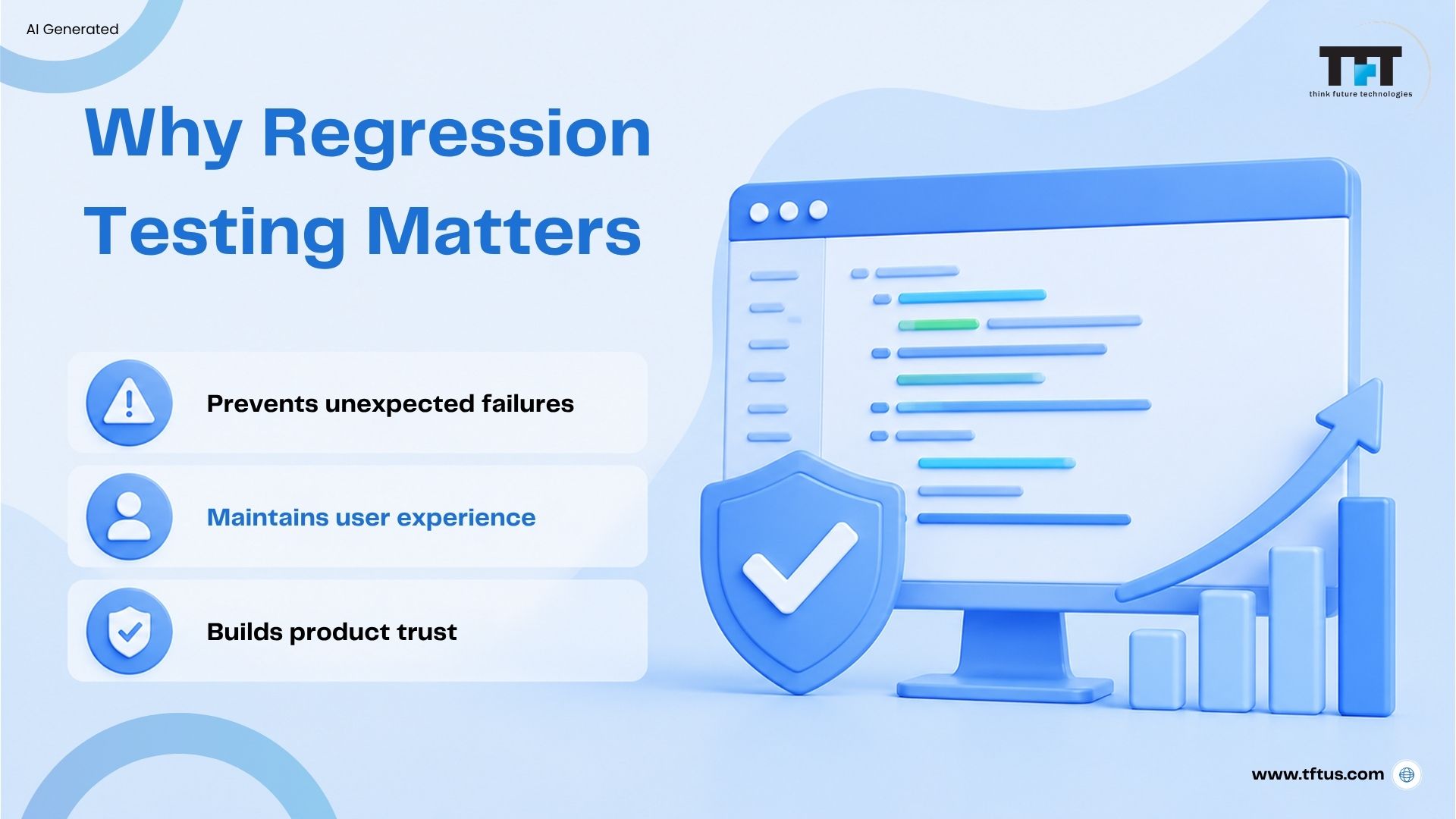
When you change software, even a small change can cause big problems. Regression testing confirms that the new changes do not degrade the experience of something that was working today.
Regression testing ensures product stability and manages both software quality and risk.
Users expect their applications to work consistently with every update. Regression testing helps maintain this consistency by validating existing functionality. Maintaining a consistent, expected user experience builds user confidence and protects the brand’s reputation.
When should Regression testing be performed?
You should perform regression testing whenever you make code changes that could affect the system’s behavior.
New features, user interface changes, bug fixes, or changes to integrations are all code changes that require regression testing.
In an Agile environment, continuous integration and continuous delivery (CI/CD), regression testing is performed frequently, many times automatically after each build.
The Regression Testing Process
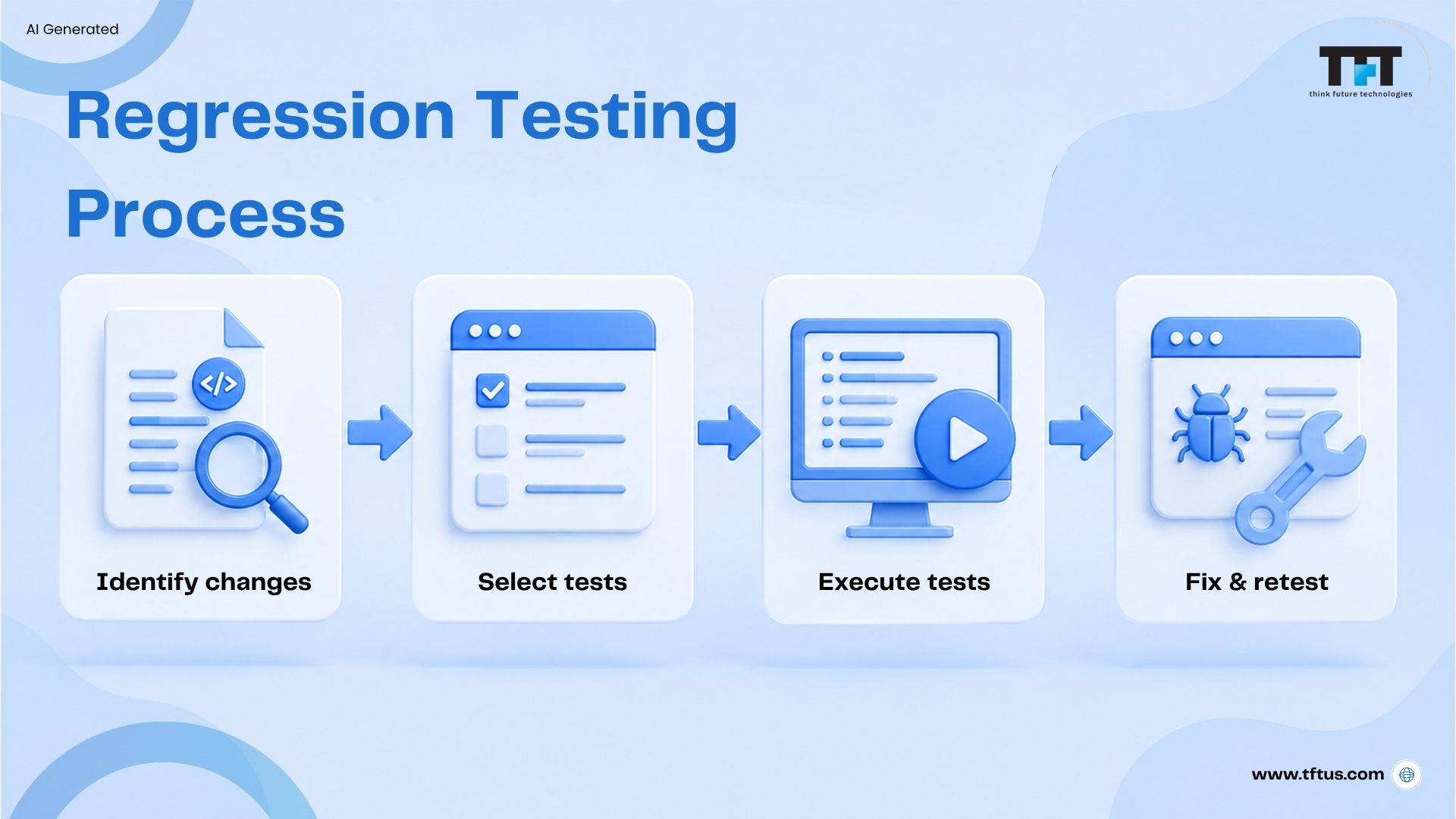
Below is a typical regression testing process:
- Identify the areas of your application that are affected by the new changes.
- Select the relevant test cases from the test suite.
- Execute your tests using either manual regression testing or automated testing tools.
- Compare your test results with the baseline you identified previously.
- Fix the issues and rerun your tests to validate the code’s continued stability.
Continue the process until your application behaves as expected. However, regression testing is often resource-intensive, leading to the development of techniques like test selection and minimization to reduce execution time while maintaining coverage (Source: MDPI Research Study).
Test Data Management in Regression Testing
Effective regression testing relies on consistent, high-quality test data. Poor data can cause inaccurate test results and missed defects.
Teams must ensure:
- Test data is consistent across environments.
- Sensitive data is properly masked.
- Data sets are refreshed regularly.
- Test scenarios use realistic input values.
Proper test data management helps maintain test reliability and ensures regression tests produce meaningful, repeatable results.
Types of Regression Testing
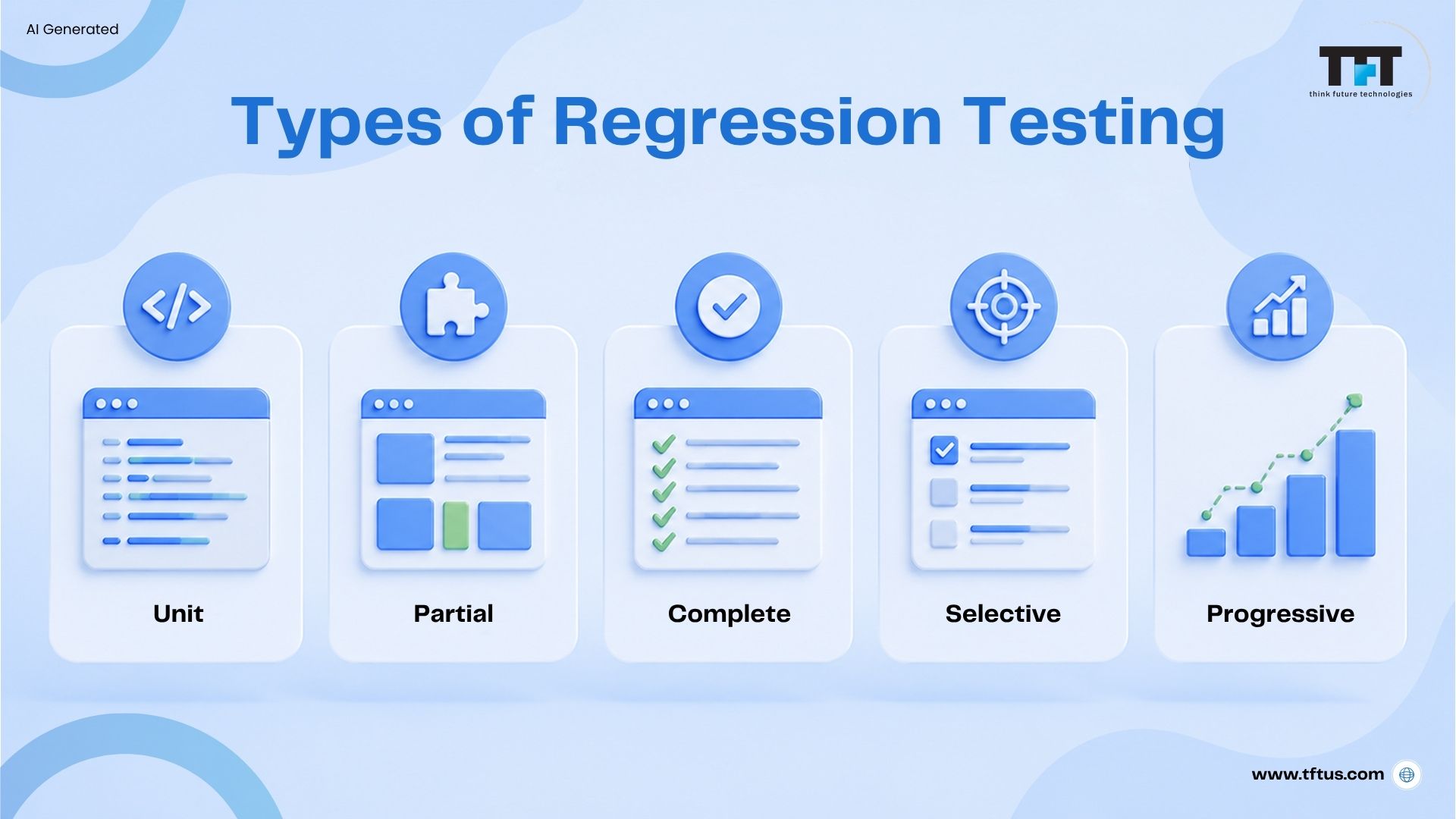
There are multiple types of regression testing, each with a specific purpose:
1. Unit Regression Testing
This type of test tests one module after it has been changed. Developers use regular unit regression testing to verify the correct execution of small units of code.
2. Partial Regression Testing
Partial regression testing focuses on only the modules directly impacted by the latest code changes.
3. Complete Regression Testing
When there have been major code changes, you will run the full test suite, called complete regression testing, to validate that the full application works.
4. Selective Regression Testing
To avoid full application testing, selective regression testing runs only test cases related to the issue addressed.
5. Progressive Regression Testing
Validating both old and newly added functionality to ensure new code works correctly when new features are added is called progressive regression testing.
Each type of testing will help strategically manage time based on the project’s size, the urgency determination, and the manageability of functionality regression testing.
6 Best Practices for Regression Testing
To ensure a smooth and efficient regression testing process, it is important to adhere to these best practices:
- Ensure that test cases are simple and modular.
- Prioritize the test cases so you can run the high-risk tests first.
- Maintain stable environments to ensure consistent test results.
- Integrate regression testing early in your development process.
- Leverage existing test cases when applicable.
- Use a combination of manual testing and automation testing for better coverage.
Applying these best practices for regression testing will result in more reliable applications.
This discussion highlights practical best practices that help teams perform regression testing more efficiently and effectively.
How to Execute Efficient Regression Testing?
Efficient regression testing is highly time- and cost-saving for a company. The following are the ways to execute regression testing. Efficient execution prioritizes critical test cases, quickly exposing major defects, followed by minor ones.
- When possible, use parallel testing in your infrastructure. It allows multiple tests to run concurrently, significantly reducing the total execution time. This encourages faster feedback and frequent testing cycles.
- In addition, observe test results closely and review failure patterns in full. Determine the root causes rather than the symptoms of failures. Fix tests that fail for the wrong reasons immediately.
Regression Testing Tools
Modern teams leverage tools to enable regression testing to be done more quickly and accurately. Some of the more commonly used tools include:
- Selenium:
Widely used in web automation. - Cypress:
Modern and rapid testing suited for web applications. - TestGrid:
Cloud-based, enabling web application testing alongside mobile. - BrowserStack:
Excellent for testing in parallel across several browsers. - Applitools:
Made for visual regression testing.
These tools enable testers to run regression tests efficiently and catch visual or functional bugs before release.
Regression Testing Techniques
Below are the four regression testing techniques-
Retest All Technique
The retest-all technique involves rerunning all the tests in the regression suite. The benefit is that it offers complete coverage of the system’s functionality. The downside is that it requires an enormous amount of time to implement. This strategy is best for major releases and critical applications.
Test Selection Technique
The test selection technique focuses on running only tests that involve the code that was changed. It looks for tests that matter based on code and identifies tests associated with modified code sections. The test selection approach can save substantial testing time while maintaining an adequate level of coverage.
Test Case Prioritization Technique
The test case prioritization technique runs high-risk test cases or those involving the most critical functionality in the application first. The purpose of this testing strategy is to validate the most important functionality early in the testing cycle.
This allows practitioners to identify critical issues more quickly in an application.
Hybrid Technique
The hybrid technique combines the two techniques of test selection and prioritization for the greatest benefit. The hybrid technique will select qualifying tests based on the changed code, then further classify each test by prioritizing them according to their importance. While the hybrid will be time-saving, it will still cover the regression suite’s functionality.
Regression Testing and Automation
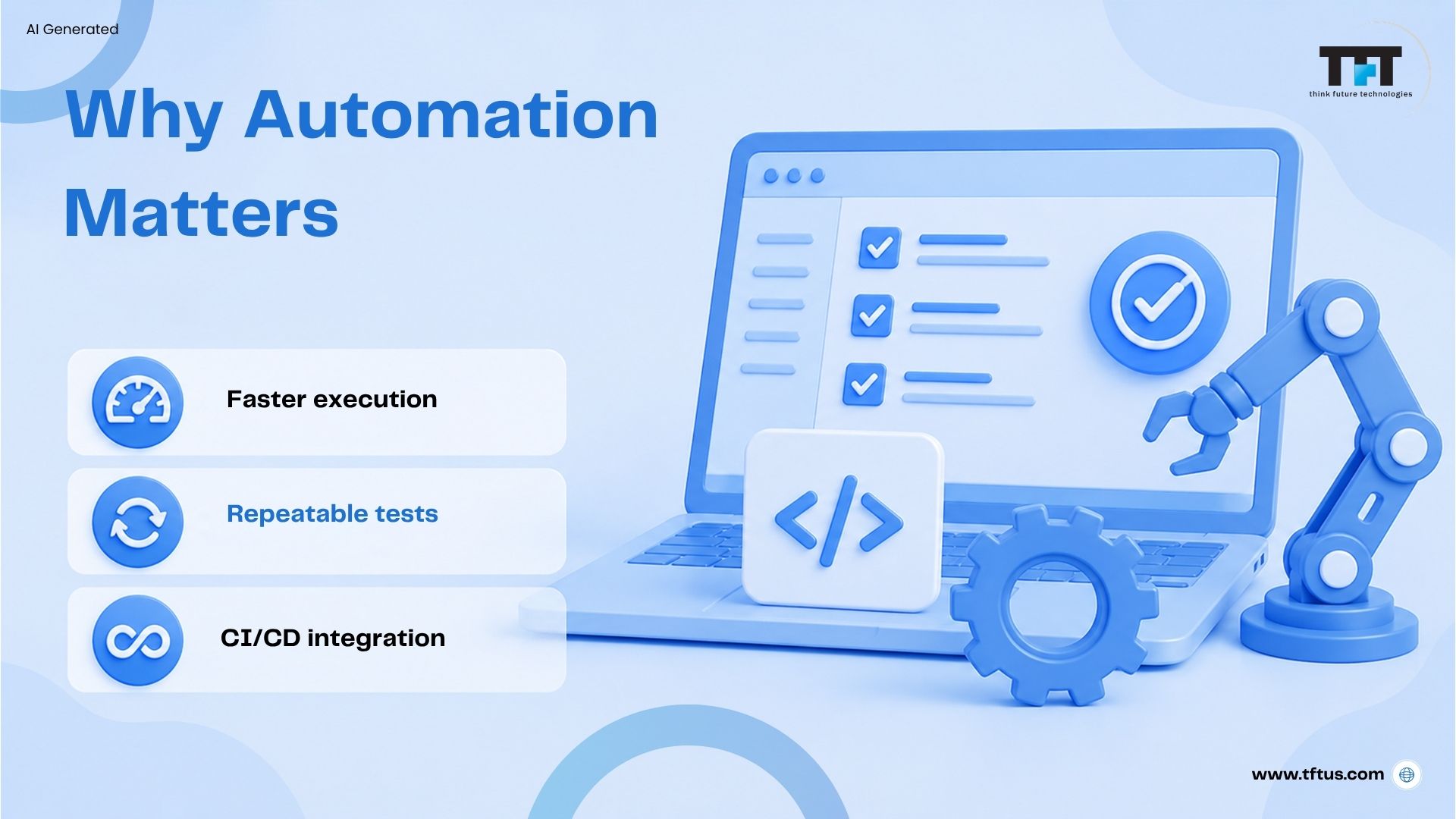
Automation is crucial for effective regression testing. Additional tests can be run repeatedly with minimal additional effort, saving time and money.
Automation also enables continuous regression testing, ensuring that every change is validated before deployment.
Most QA teams build automated regression testing into their build pipelines to discover defects sooner and shorten their release cycles.
What are the Benefits of Regression Testing ?
Regression testing has benefits beyond just catching bugs. Here are four key advantages:
- Ensures product’s stability
It confirms that software updates haven’t broken your existing features. - Improves the quality of your software
Continuous testing leads to higher-quality software that meets a reliable standard. - Saves time and effort
Automation reduces the amount of manual retesting. - Improve customer satisfaction
A stable software product earns your users’ trust.
Case Study: Improving Test Coverage and Software Quality
A financial services company improved its software reliability by implementing automated regression testing early in its development process. The organization replaced manual testing with structured automated workflows.
As a result, test coverage increased from 76% to 95%, while overall build quality improved, and manual effort was significantly reduced.
This case demonstrates how investing in regression testing not only improves efficiency but also enhances software quality and user trust.
(Source: Nitor Infotech Case Study)
What are the Disadvantages of Regression Testing ?
There are a few disadvantages to regression testing, despite its significance:
- Regression testing can be time-consuming until automated.
- Human error can be made during manual regression testing.
- Over time, managing large regression test suites can become troublesome.
- Test prioritization must be performed to avoid delaying releases.
To mitigate these disadvantages, use regression testing tools and strategies to determine when to run specific tests.
ROI of Regression Testing
While regression testing requires time and resources, it significantly reduces long-term costs by preventing defects from reaching production.
Teams can measure the return on investment (ROI) of regression testing using factors such as:
- Reduction in post-release defects
- Decrease in customer-reported issues.
- Faster release cycles due to early bug detection
- Lower maintenance costs over time
For example, fixing a bug during development is far cheaper than fixing it after release, making regression testing a cost-effective quality assurance strategy.
5 Reasons Why Regression Testing is Important for Quality Assurance
Below are the 5 key reasons why regression testing is significant for quality assurance:
- Regression testing helps ensure software remains stable over the long term.
- Regression testing enables new features to be implemented without breaking existing ones. The value of regression testing becomes clear when we consider the uncertainties of any update.
- Regression testing ensures end users are given predictable behavior. After fixing a defect, the development team will always want to verify that their solution actually worked, but they will also want to verify that their change did not introduce a new malfunction.
- Automated regression testing makes this verification happen much faster than manually running the tests.
- An automated regression testing tool will quickly run many tests much faster than they could be done manually. This will allow for more frequent testing without slowing down the overall development work process.
Continuous Regression Testing
The term “continuous regression testing” refers to the automated regression testing conducted when a new build is released. This practice focuses on maintaining real-time software quality assurance.
This method works best with the DevOps methodology, as it produces a steady state in which builds are deployed quickly and efficiently.
Automated Regression Testing
Automated regression testing uses software tools to run test cases without manual intervention. The scripts will perform the same validation steps in the same order each time they run, eliminating the potential for human error and minimizing testing time.
Automation tools interact with the application in exactly the same way as a human user, entering data, clicking buttons, and verifying that expected outcomes occur. The tools produce documents and detailed reports that identify which test cases passed and which failed.
When to Automate Regression Tests
Automating regression tests that run often and rarely change is beneficial. Stable test scenarios will return the best value on your investment in automation. Tests associated with core functionality should also be automated to ensure regular validation of your critical functionality.
Data-driven tests that require multiple input combinations are good candidates for automation. Automated tests can often run hundreds of tests quickly with varying data. This allows for complete testing without taking any time away from a test analyst or tester.
It is not advisable to automate tests that change frequently or require human judgment. UI tests that require visual assessment may not be suitable for automation. You want your automation efforts to yield the housing for which you invest in automation.
Automation and CI/CD integration
In today’s software development world, automated regression testing is part of all continuous integration (CI) pipelines. Automated testing tools run predefined scripts whenever developers push code, detecting failures as quickly as possible.
This mechanism keeps the development cycle moving quickly while guaranteeing that no defects have slipped through.
Case Study: Reducing Regression Testing Time with Automation
A major B2B online retailer transformed its regression testing process by shifting from manual testing to an automated Agile workflow. Previously, full regression testing took nearly a week to complete.
By implementing continuous automated regression testing multiple times a day across different browsers and environments, the team reduced testing time by 70%, bringing it down from one week to just 1.5 days.
This shift also improved development efficiency and enabled faster release cycles without compromising quality.
(Source: Ten10 Case Study)
Regression Testing in CI/CD Pipelines
In modern development workflows, regression testing is integrated directly into CI/CD pipelines to ensure continuous validation of code changes.
Automated regression tests are triggered:
- After every code commit
- During the build stages
- Before deployment to production
This approach allows teams to detect issues early, maintain code stability, and release updates faster without compromising quality.
Regression Testing in Agile and CI/CD
The Agile way of working means that new features are introduced regularly. In this way, regression testing in Agile ensures the stability and bug-free nature of each sprint release.
Automation becomes very important here, since you’ll be testing very frequently after each sprint iteration. It is not uncommon for an Agile team to initiate their regression tests nightly using CI/CD tools.
In Agile, changes are rapid. Teams will do regression testing promptly after a sprint or commit. In CI/CD, it is now part of continuous integration—ensuring that every build is stable. This aligns with test automation and facilitates quick, safe delivery.
How to Perform Regression Testing?
To conduct regression testing, the QA team determines which core modules are affected by the latest release. The QA team will select relevant test cases from the regression testing suite and validate the results. Automation helps accomplish these tasks quickly in stable test environments.
Regression Testing vs Retesting
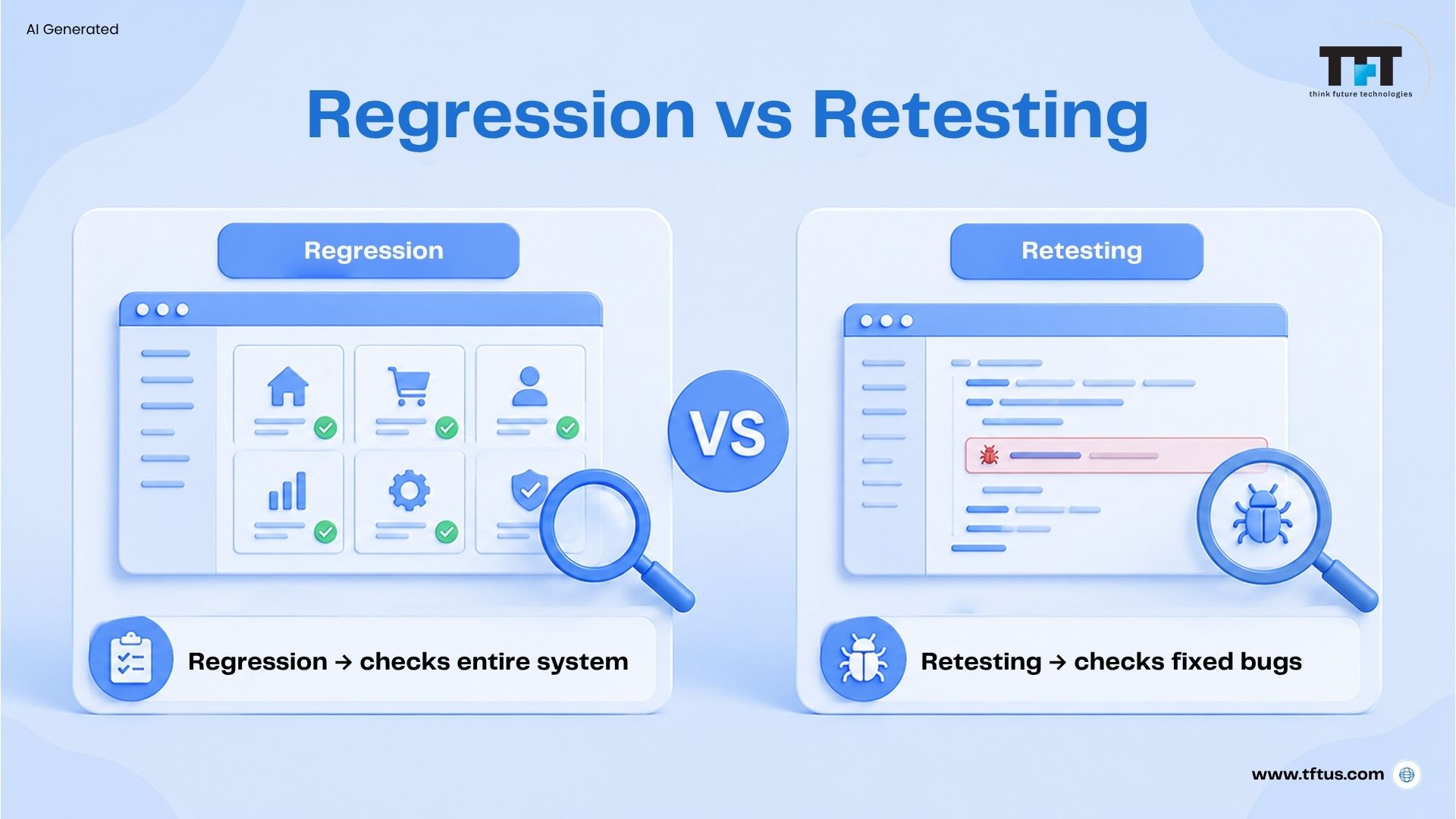
| Aspect | Regression Testing | Retesting |
| Purpose | Verifies that existing functionality still works after code changes | Confirms that specific defects have been fixed correctly |
| Focus | Checks for unintended side effects in unchanged areas | Focuses on the exact scenarios where bugs occurred |
| Scope | Broad coverage of existing functionality across the application | Narrow scope limited to previously failed test cases |
| Test Cases | Runs passed test cases to ensure they still pass | Runs failed test cases to verify they now pass |
| Timing | Performed throughout the development lifecycle after any code modification | Performed specifically after developers fix a reported defect |
| Frequency | Continuous and repetitive with every software change | One-time activity between bug identification and closure |
| Automation | Highly suitable for automation due to repetitive nature | Difficult to automate as it often requires human judgment |
| Test Selection | Includes test cases unrelated to recent changes | Only covers the specific functionality that was broken |
| Goal | Ensuring overall application stability and consistency | Validating the effectiveness of bug fixes |
| Priority | Lower priority compared to retesting in specific instances | Higher priority as it directly addresses known defects |
| Execution | Can run in parallel with other testing activities | Must be completed before the bug can be marked as resolved |
| Coverage Growth | Expands as the application grows with new features | Remains focused on fixed defects only |
Key Considerations
Regression testing and retesting are complementary testing processes for evaluating software quality. Regression testing enables the testing team to ensure broad coverage when concerns exist about the unintended impact of change. Retesting serves to confirm focus with verification that concerns have been fixed.
Given the effectiveness of regression tests, teams should, where possible, leverage automated regression testing to increase speed and consistency of execution. Retesting often involves more manual execution with careful verification of fixes. Both testing strategies are necessary components of a comprehensive quality assurance plan.
Measuring Regression Test Results
- You should analyze the results after each test run.
- In other words, note how many tests passed, failed, or were skipped.
- You should also maintain a record of the tests that continually fail, which may suggest underlying issues.
These observations provide you with valuable information to enhance software quality and prevent the same bugs from happening again.
What are some Challenges of Regression Testing ?
Though regression testing is an efficient automated testing strategy, there are several challenges:
- Identification of appropriate test cases: Determining which tests to rerun is difficult.
- Time Requirements: Many organizations are deploying buildings frequently and, in some situations, have to compress testing timeframes.
- Tool Compatibility: Automation tools must work within the project’s tech stack.
- Data Management: Test data must remain the same across environments.
Implementing a comprehensive regression testing strategy will help address these challenges effectively.
Real-World Example of Regression Testing
For instance, an e-commerce site that implements a new discount feature. Once the application is deployed, the checkout process must also function correctly.
Regression test cases help validate new discount logic while ensuring that existing payment and cart modules have not malfunctioned.
This demonstrates the benefit of regression testing for user reassurance and uninterrupted activities within a production application.
The Future of Regression Testing
With AI and machine learning, the future of regression testing is bright. Intelligent testing tools can now identify risky code and even automatically generate test cases targeting those areas.
Tools incorporating AI, such as TestGrid AI and BrowserStack Smart Testing, are reported to reduce testing timeframes by analyzing historical regression data.
The growing use of AI and automation is transforming regression testing, with technologies such as generative AI now applied to test coverage analysis, defect detection, and visual regression testing (Source: EY Quality Engineering Report).
The next evolution of software testing will feature automation, analytics, and intelligence to achieve even quicker software releases.
Conclusion
In conclusion, regression testing is a key practice for ensuring software stability and quality throughout the development life cycle. It prevents code changes from adversely impacting any existing functionality while giving teams the confidence to ship changes.
Effective regression testing practices must balance strategy, tools, and automation to achieve the optimal balance of comprehensiveness and efficiency.